Share
Isotonic vs. Hypertonic: How to Match Your Hydration to the Effort
If you've stood in front of a shelf of sports drinks, you've probably seen both words — isotonic and hypertonic — and grabbed whichever one sounded more familiar. Most athletes default to "isotonic" because it's the term they've heard the most, not because they know it's the right call for what they're about to do.
Here's the problem with that: isotonic and hypertonic drinks aren't different flavors of the same thing. They're built to solve different problems. One is optimized to move fluid and electrolytes into your system as fast as possible. The other is built to deliver more fuel per scoop, for sessions where energy demand is the bigger issue. Grab the wrong one for the effort in front of you, and you're either under-fueling a long day or overloading your gut on a short one.
Let's break down what's actually happening, and how to pick.
What "Tonicity" Actually Means
Tonicity is just a comparison: how concentrated is this drink relative to your blood?
Your blood plasma sits at an osmolality of roughly 280–300 mOsm/kg — a measure of how many dissolved particles (sugars, electrolytes) are packed into the fluid. When you drink something, your gut compares its concentration to that number, and that comparison determines how fast the fluid gets absorbed and how much energy comes with it.
- Isotonic — concentration close to blood (roughly 270–330 mOsm/kg, typically a 6–8% carbohydrate solution). Fluid and carbs move through the gut at close to the same rate as water, so you get hydration and energy without one slowing down the other.
- Hypertonic — concentration higher than blood. More carbohydrate packed into the same volume, which means more fuel — but your gut has to draw fluid in to dilute it before that fluid and those carbs can be absorbed. That's why hypertonic drinks are built for effort, not for pure hydration.
Neither one is "better." They're built for different jobs.
Isotonic: Built for Fluid Balance During the Effort
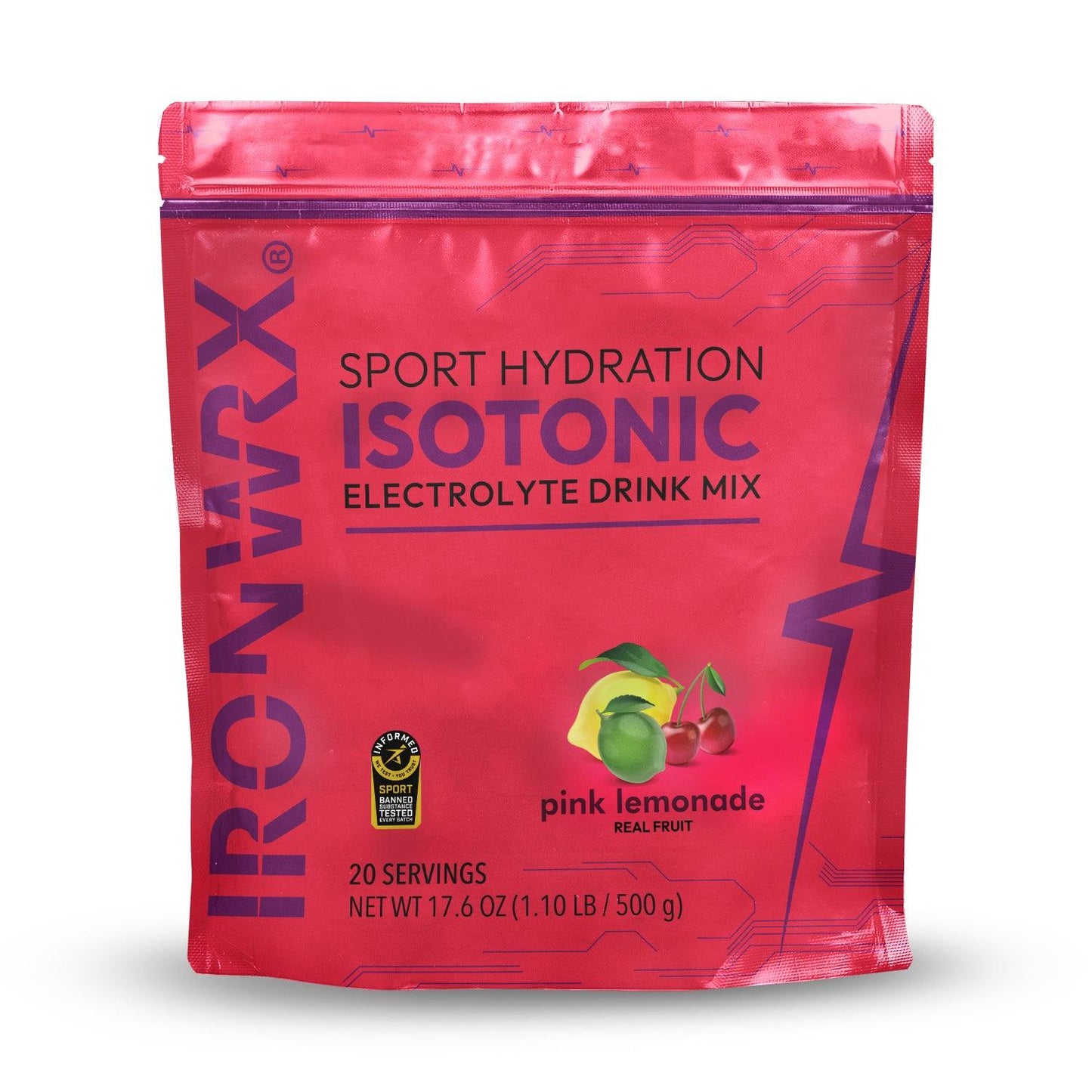
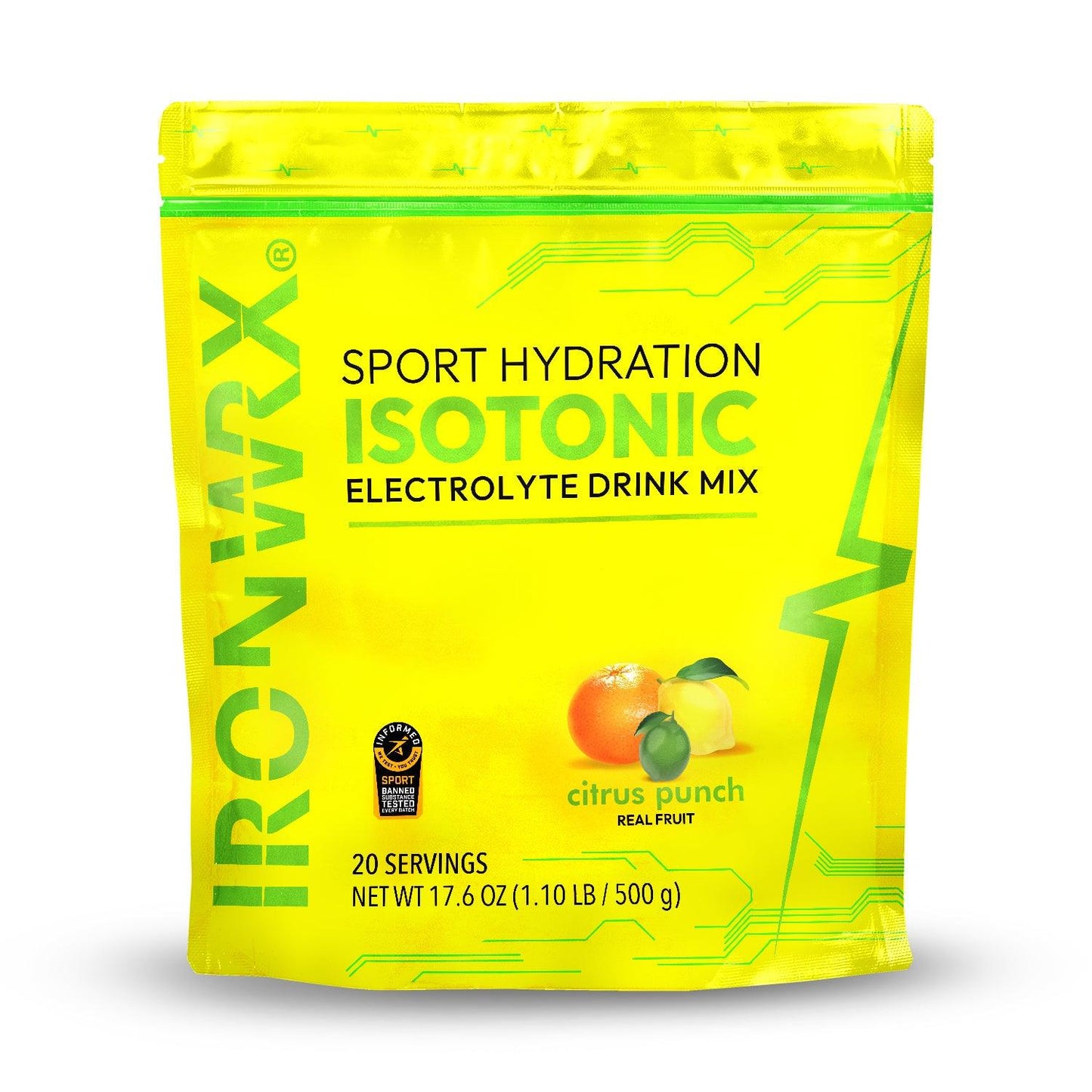
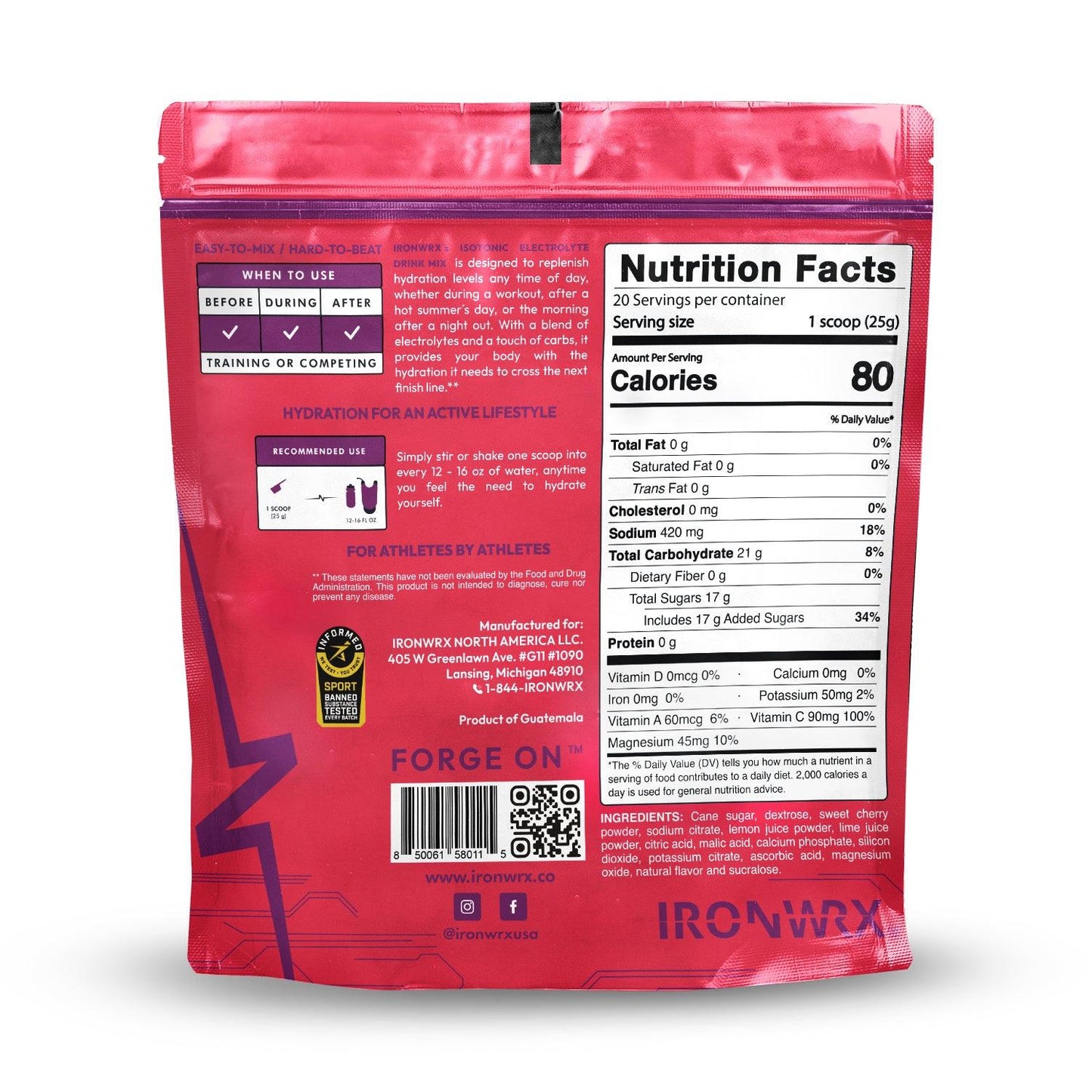
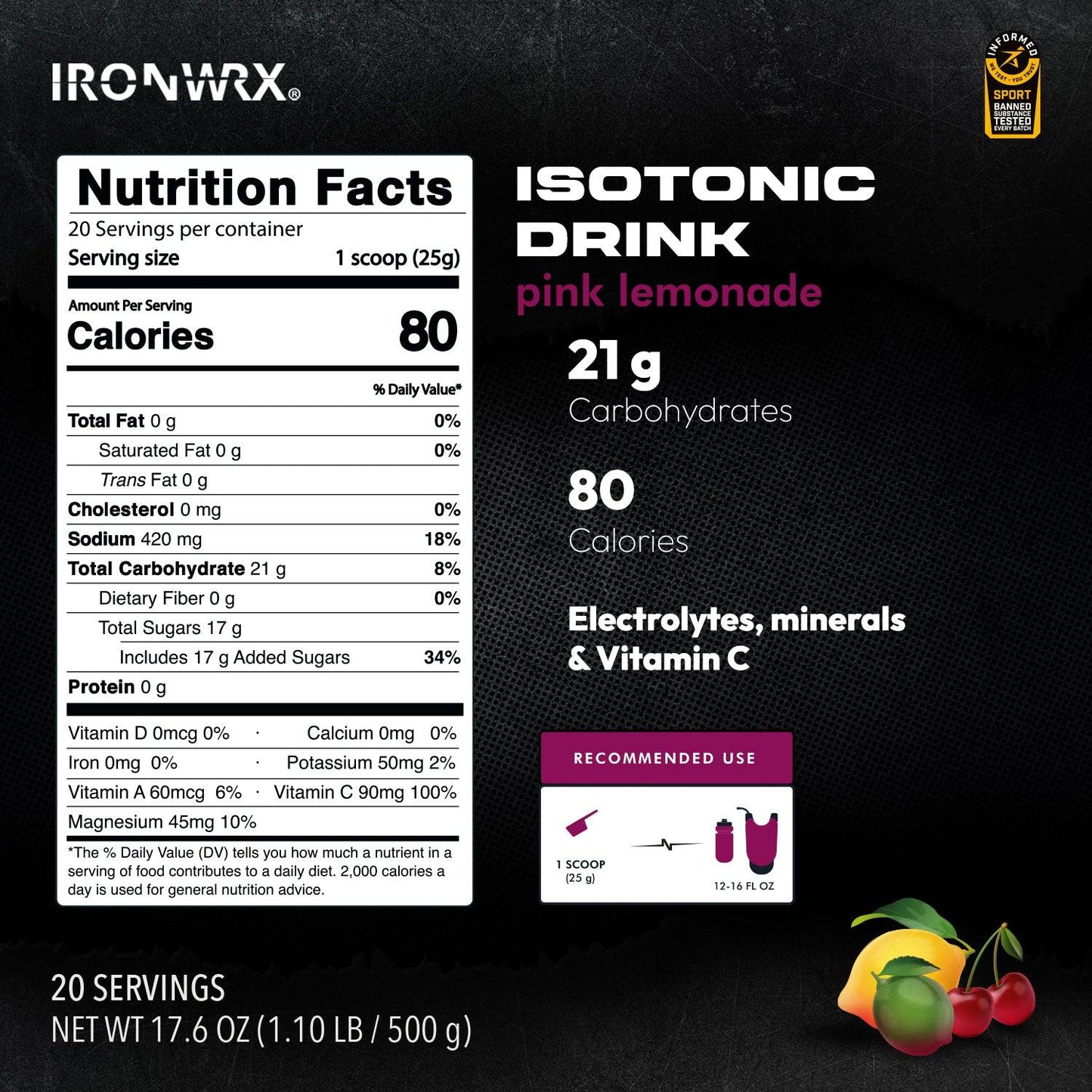
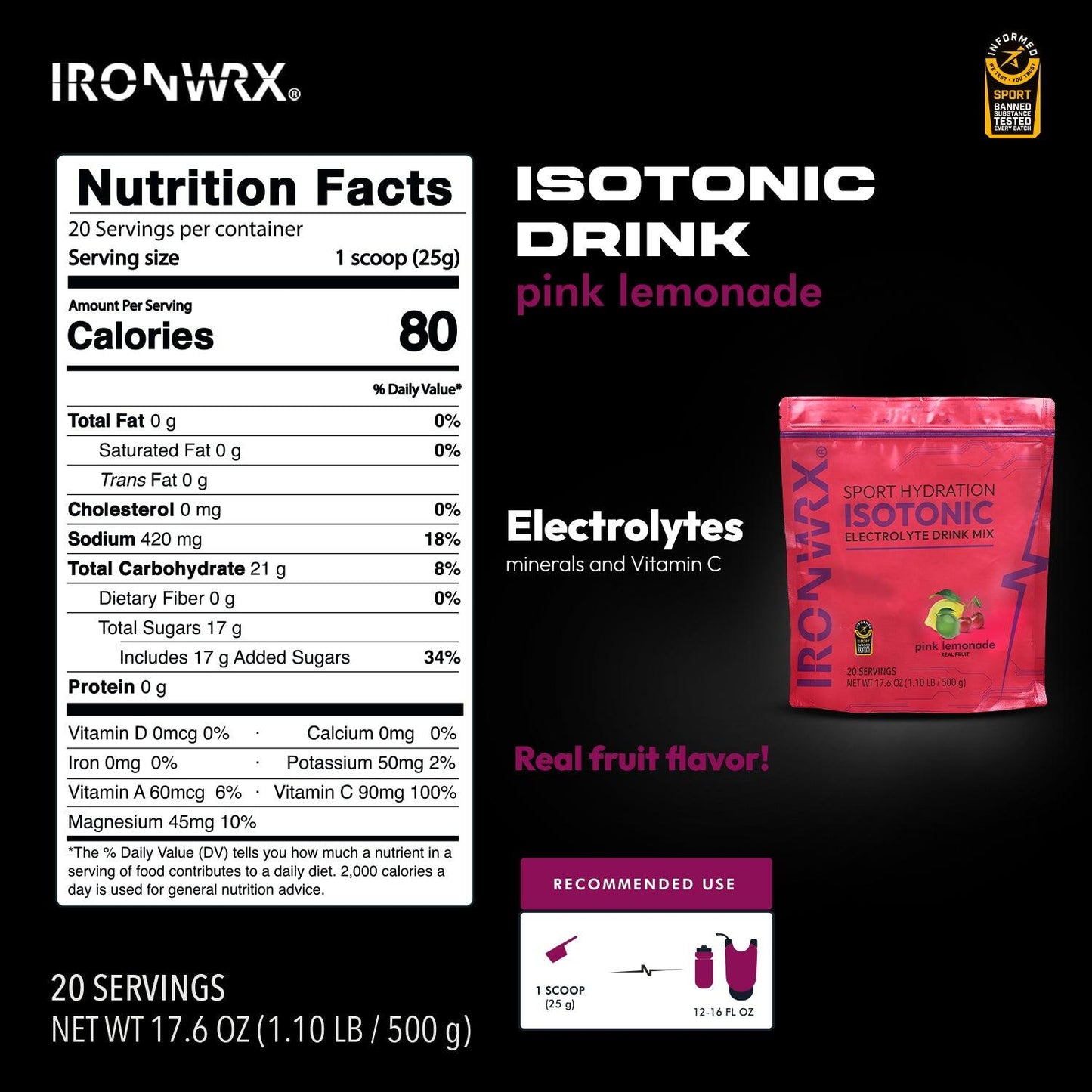
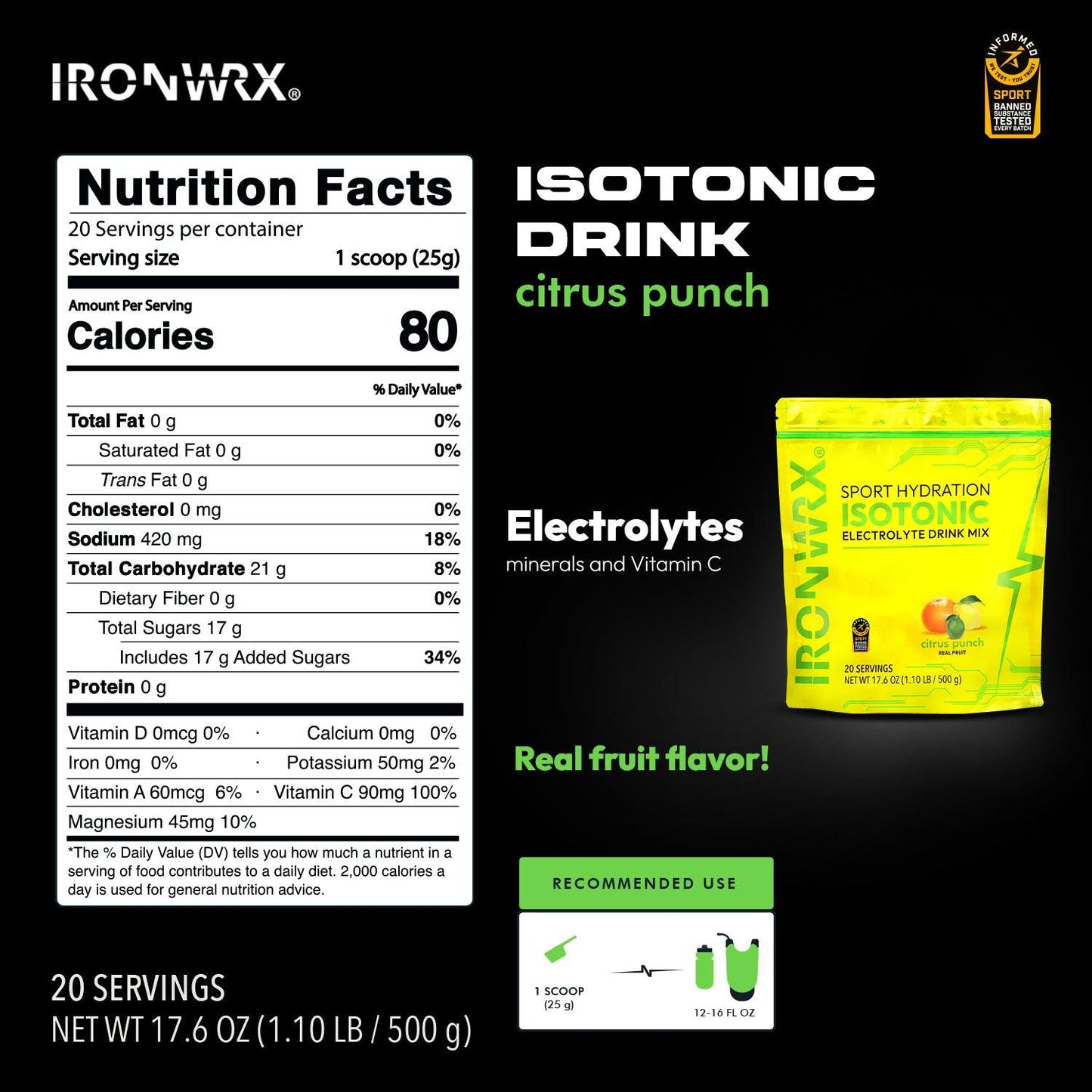
IRONWRX Isotonic Electrolyte Drink Mix is formulated to sit close to your body's own concentration — which is exactly why it's the right call for activities under two hours or day-to-day hydration needs. When fluid loss is the primary thing you're managing (heat, sweat rate, a moderate-intensity session), you want a drink that gets absorbed as close to the rate of plain water as possible, without leaving carbs and electrolytes behind.
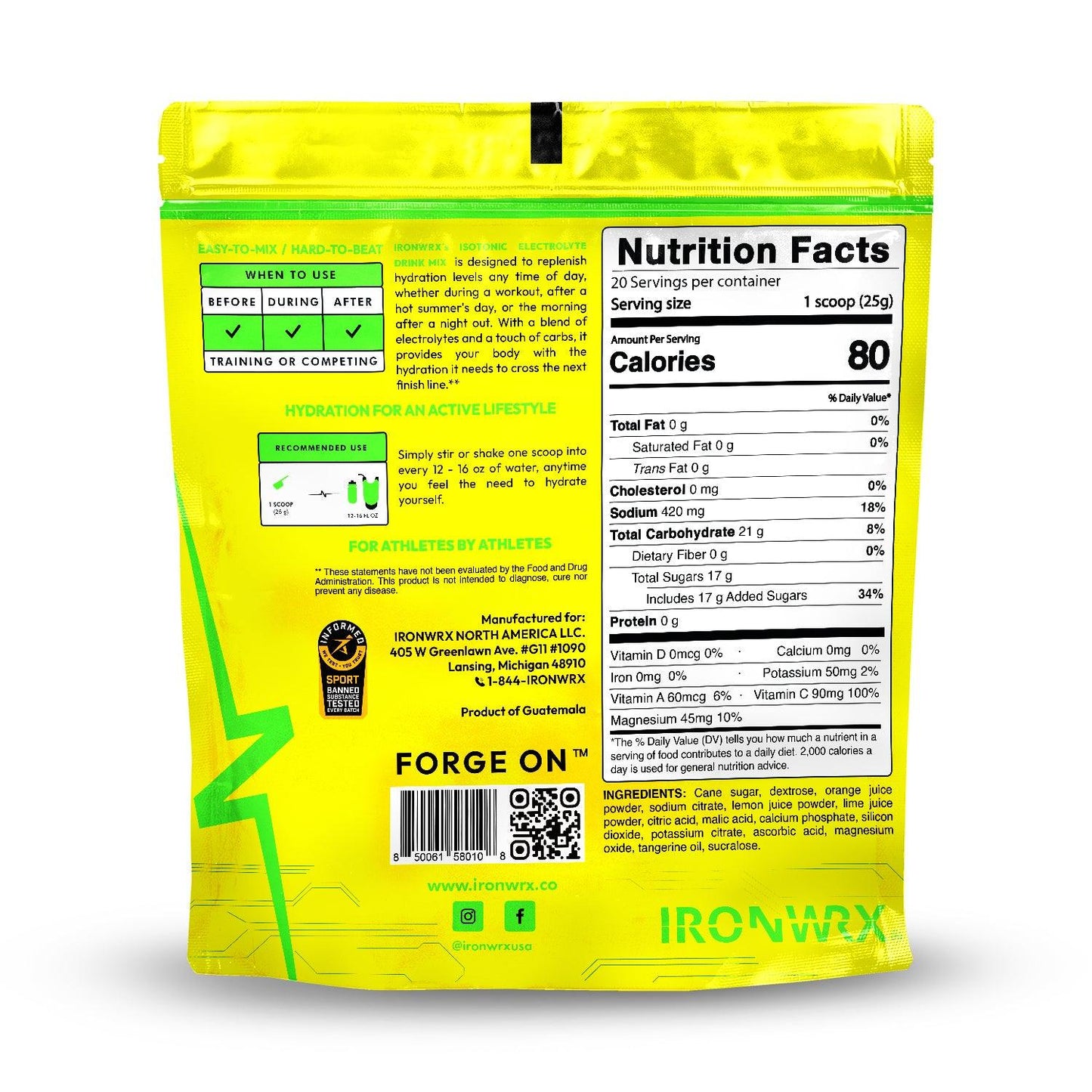
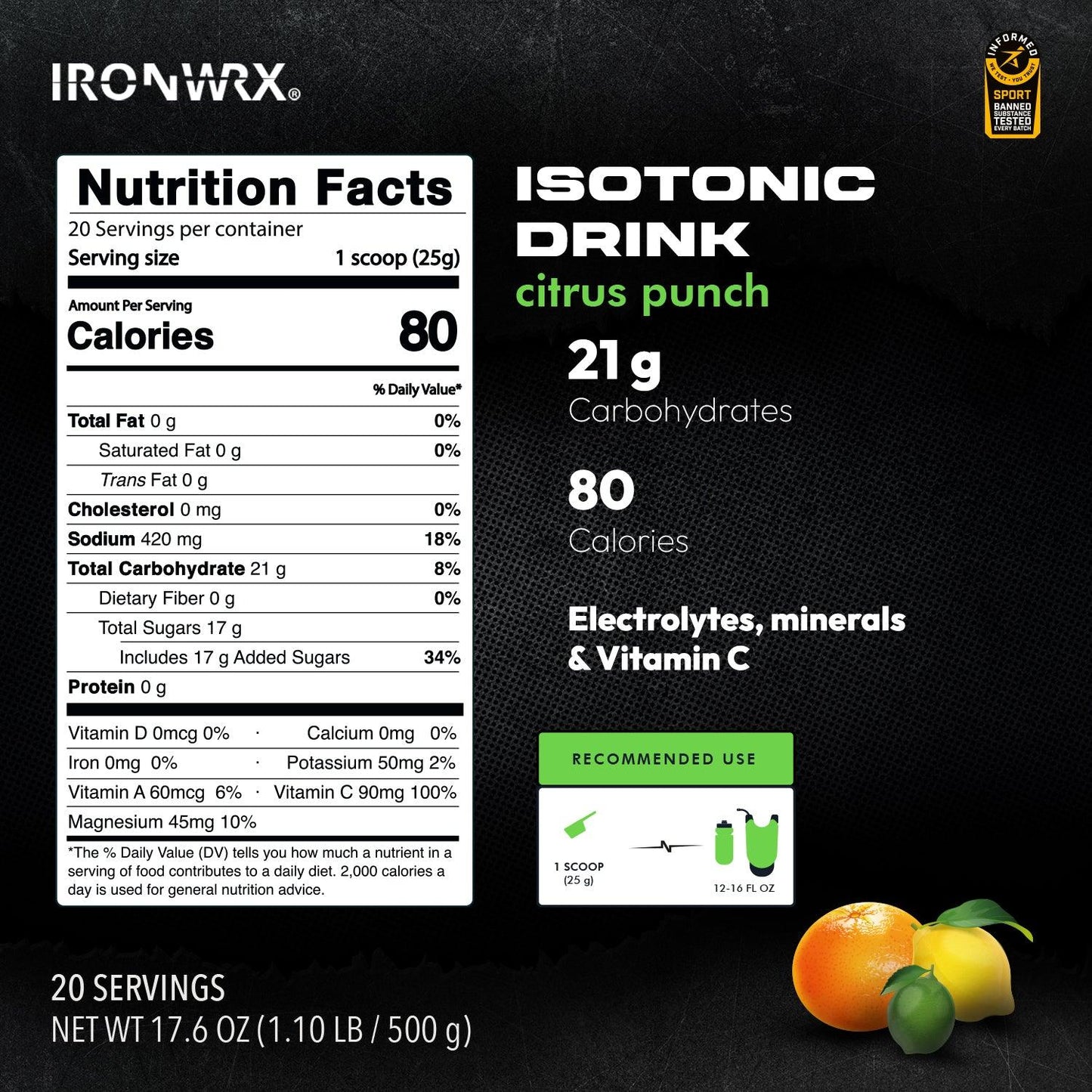
Per serving, it's carrying 420mg sodium, 50mg potassium, and 45mg magnesium — the three electrolytes doing the actual work of nerve signaling and muscle contraction — plus 90mg vitamin C, in a real-fruit, no-artificial-flavor formula. Mix one scoop into 12–16 oz of water and it's built to be your go-to for a standard training session or general daily hydration, not just race day.
Reach for Isotonic when: the session is under two hours, you're managing heat or a heavy sweat rate, or you just need consistent daily hydration that doesn't sit heavy.
Hypertonic: Built for Fuel During Long, Hard Efforts
IRONWRX Hypertonic Performance Drink is a different tool. It's formulated with a carbohydrate blend — maltodextrin, dextrose, and isomaltulose — each with a different glycemic index, so the energy release is staggered instead of dumped all at once. That's the point: on a long day, you don't want a sugar spike and crash, you want steady fuel.
Because it's carrying more total carbohydrate per serving (43g per 50g scoop) than Isotonic, it sits above blood concentration — hypertonic by definition. That's a feature when energy demand is high: long climbs, multi-hour efforts, high-intensity sessions where your muscles are burning through glycogen faster than a lighter drink can replace it. It also carries 2,000mg of amino acids (L-glutamine, L-alanine) to support the recovery side of a long session, plus a full electrolyte profile (sodium, potassium, sea salt, magnesium) — again, real fruit, no artificial flavors.
Because it's more concentrated, dosing matters more here than with Isotonic. IRONWRX's guidance is one scoop (50g) in 12–16 oz of water, spaced no closer than every 90 minutes — giving your gut time to process the load before the next dose comes in.
Reach for Hypertonic when: the session runs long (multi-hour training, race day, big vert), the intensity is high enough that glycogen is the limiter, or you're pre-loading before a long or hot effort and want more fuel banked before you start.
Quick Decision Guide
| If your session is... | Reach for |
|---|---|
| Under 2 hours, moderate intensity | Isotonic |
| Daily hydration, no training load | Isotonic |
| Multi-hour endurance effort | Hypertonic |
| High-intensity, long-duration (big climbs, race day) | Hypertonic |
| Hot conditions, heavy sweat, fluid loss is the main risk | Isotonic |
| Long effort where you're already managing fluids separately and need more carbs | Hypertonic |
A lot of endurance athletes end up using both — Isotonic for the bulk of training and daily hydration, Hypertonic reserved for the long or high-output days where fuel, not fluid, is the limiter. That's not overcomplicating it. That's just matching the tool to the job.
Both Are Informed Sport Certified — Every Batch
Whichever one you reach for, every batch of both products is third-party tested by Informed Sport for substances banned in competition. If you're a tested athlete, that's not a marketing footnote — it's the difference between trusting a label and knowing what's actually in the bag.
FAQ
Is hypertonic bad for hydration? No — it's just not the right tool for pure, fast fluid replacement. Because it's more concentrated than blood, your gut pulls fluid in to dilute it before absorption, which is slower than an isotonic drink. That's exactly why it's built for fueling long or intense efforts rather than replacing an isotonic drink on a hot, short session.
Can I mix Isotonic and Hypertonic in the same session? Yes. A common approach is Isotonic through the bulk of a long session for steady hydration, with Hypertonic worked in when you need a bigger carbohydrate hit — just don't stack Hypertonic doses closer than every 90 minutes.
Which one should I use before a race? If you're pre-loading carbs before a long or hot event, Hypertonic gives you more fuel per scoop. If you're just topping off hydration in the hours before the start, Isotonic is the lighter, faster-absorbing option.