Share
Hyponatremia in Endurance Sports: Why More Water Isn't Always Better
For decades, endurance sports had a simple rule: drink early, drink often, don't fall behind on fluids. It's good advice for avoiding dehydration — but it's also incomplete, and taken too far, it can put you at risk of the opposite problem: exercise-associated hyponatremia.
This isn't a fringe concern. It's a documented, sometimes fatal condition that has shown up in marathons, ultras, triathlons, and even long hikes — and the cause usually isn't sweating too much sodium out. It's drinking too much fluid in.
What Exercise-Associated Hyponatremia Actually Is
Exercise-associated hyponatremia (EAH) is defined as blood sodium dropping below 135 mmol/L, occurring during or up to 24 hours after prolonged physical activity. Sodium is critical for nerve signaling, muscle function, and fluid balance — when it gets diluted too far, cells (including brain cells) start to swell.
EAH became a widely recognized issue in endurance sports after a cluster of cases and several deaths among marathon runners in the early 2000s, most notably at the 2003 Boston Marathon. Since then it's been documented in half marathons, ultramarathons, Ironman triathletes, and even long hikes and rowing sessions — anywhere someone spends four-plus hours drinking fluids during exertion.
The Real Cause: It's Not Just Sweat
Here's the part that surprises most athletes: EAH is primarily caused by drinking more fluid — plain water or diluted sports drinks — than your kidneys can process, not by sweating out too much sodium. During prolonged exercise, your body releases a hormone (arginine vasopressin, or AVP) that tells your kidneys to hold onto water even when you don't need it. Combine that with a habit of drinking on a fixed schedule instead of when you're actually thirsty, and sodium in your bloodstream gets progressively diluted over the course of a long effort.
In other words: the danger isn't usually "I lost too much sodium." It's "I drank past what my body could actually use."
Symptoms — and Why They're Easy to Miss
EAH symptoms often look a lot like dehydration or heat illness, which is exactly why it's dangerous — the instinctive response to feeling bad during a long race is to drink more, and if the actual problem is EAH, that makes it worse.
Watch for:
- Nausea, bloating, or a "sloshing" stomach feeling
- Headache
- Puffiness or swelling in the hands and feet
- Confusion or disorientation
- In severe cases: seizures or loss of consciousness
If you or someone near you develops confusion, seizures, or altered mental status during or after a long endurance event, that's a medical emergency — get help immediately rather than assuming it's simple dehydration and pushing more fluids.
Who's Most at Risk
- Athletes out on course for 4+ hours — the longer the exposure, the more time to overdrink
- Slower or back-of-pack finishers, who often have more aid stations and more time to drink at each one
- Smaller-bodied athletes, who need less absolute fluid volume but don't always adjust intake accordingly
- Anyone drinking on a fixed schedule ("a cup at every station") rather than based on thirst
- NSAID users — anti-inflammatories like ibuprofen can affect the kidneys' ability to excrete excess water
How Hydration Guidance Has Actually Changed
For years, the standard sports-science advice was to drink as much as tolerable to stay ahead of dehydration. As EAH research grew, that guidance shifted. The current consensus — from sports medicine bodies including the Wilderness Medical Society and the International Exercise-Associated Hyponatremia Consensus Development Conference — is to drink according to thirst, not a fixed volume or schedule. Thirst is a more reliable, individualized signal than a generic "8 oz every 20 minutes" rule, because fluid needs vary enormously by body size, sweat rate, pace, and conditions.
Where Electrolyte Drinks Actually Fit In
This is where it's worth being precise instead of making a sales pitch: an electrolyte drink doesn't prevent hyponatremia on its own. If you drink enough of anything — water or a sports drink — beyond what your kidneys can process, you can still dilute your blood sodium.
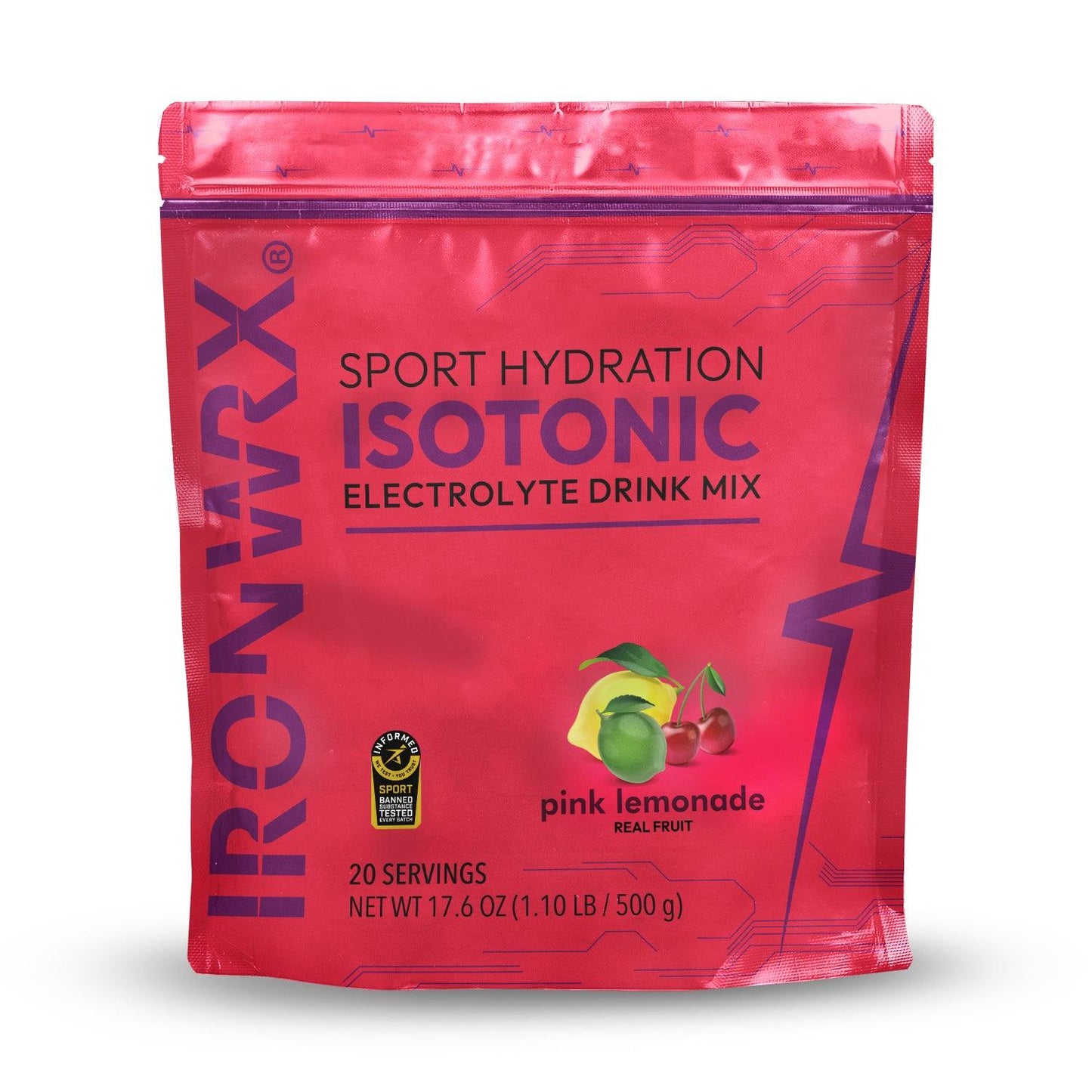
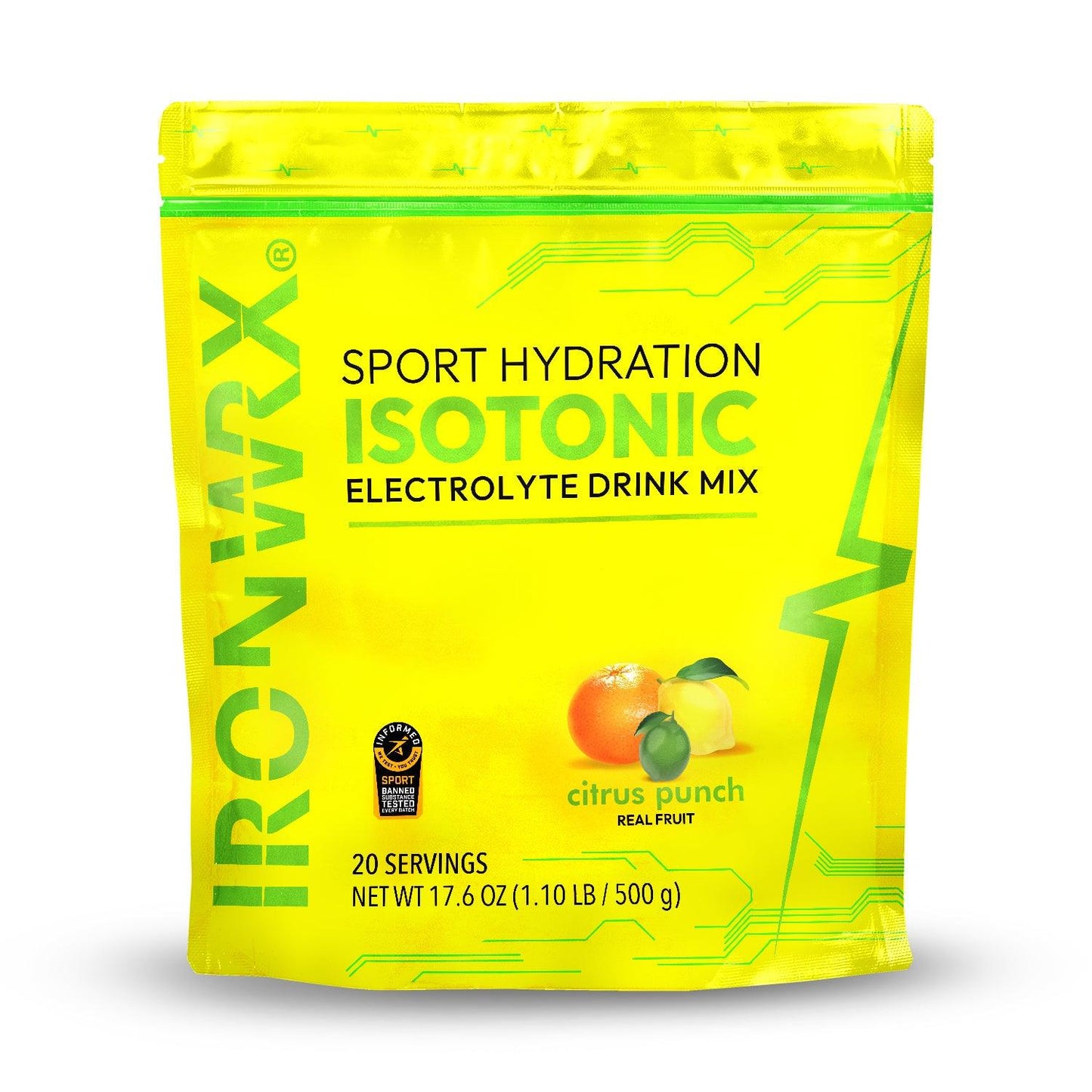
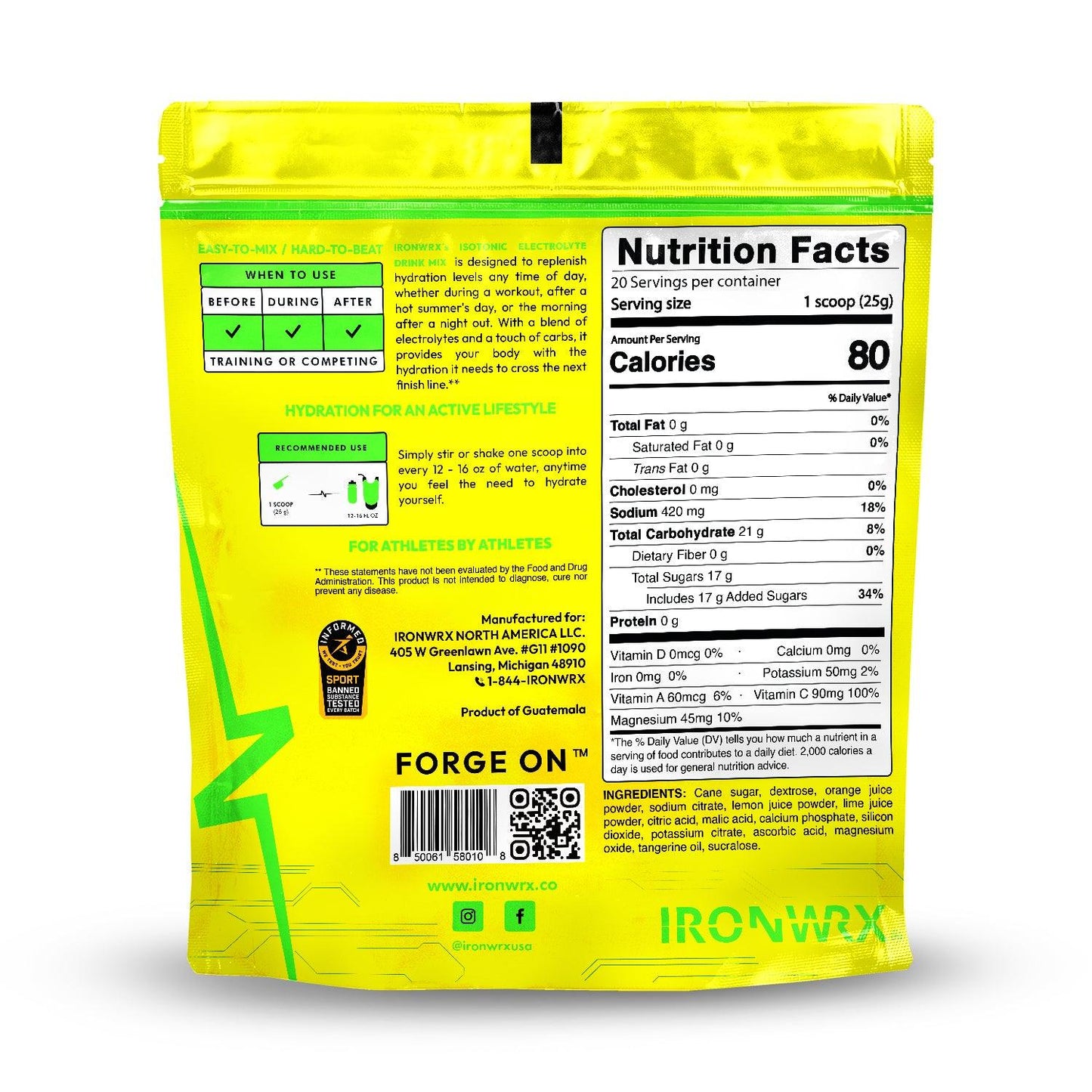
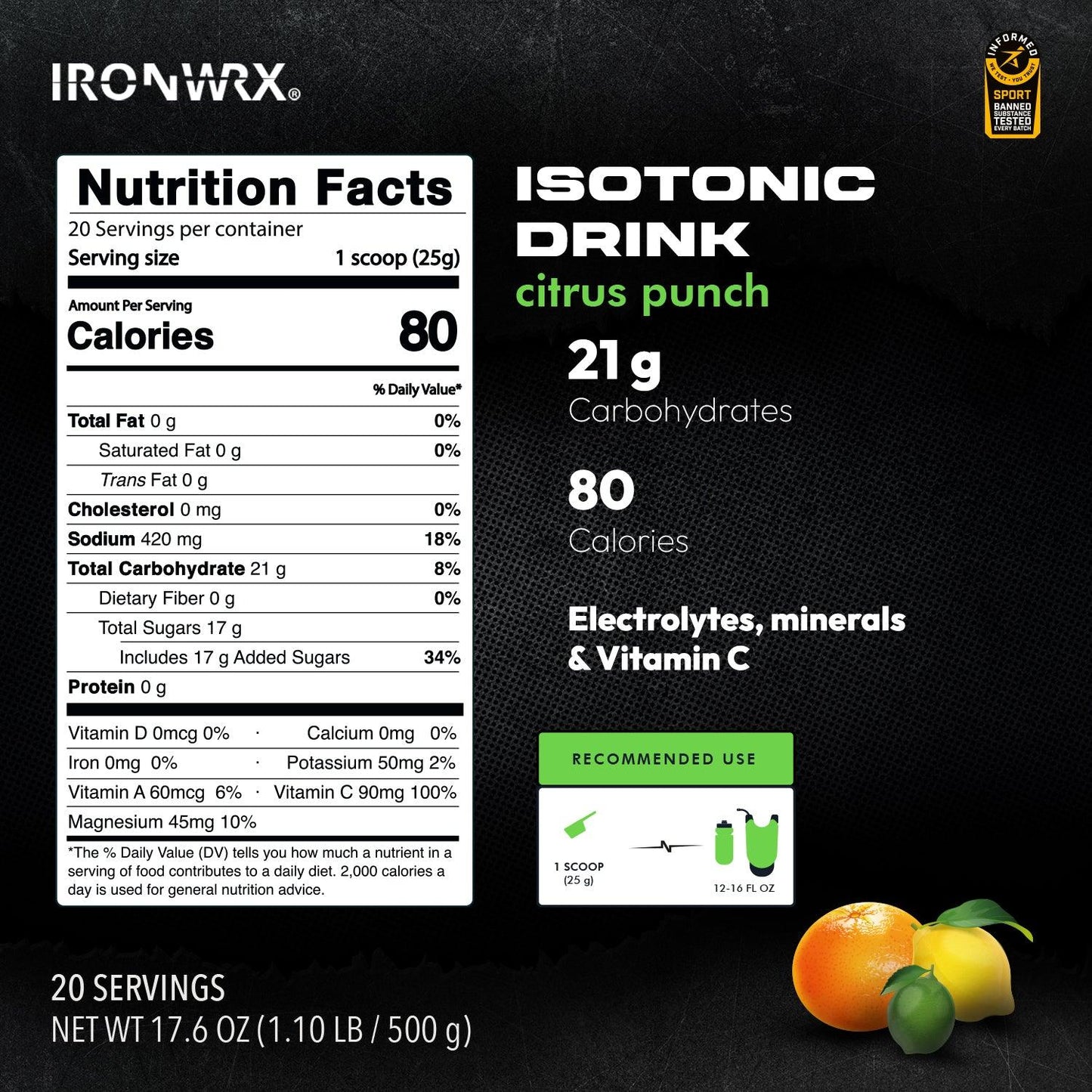
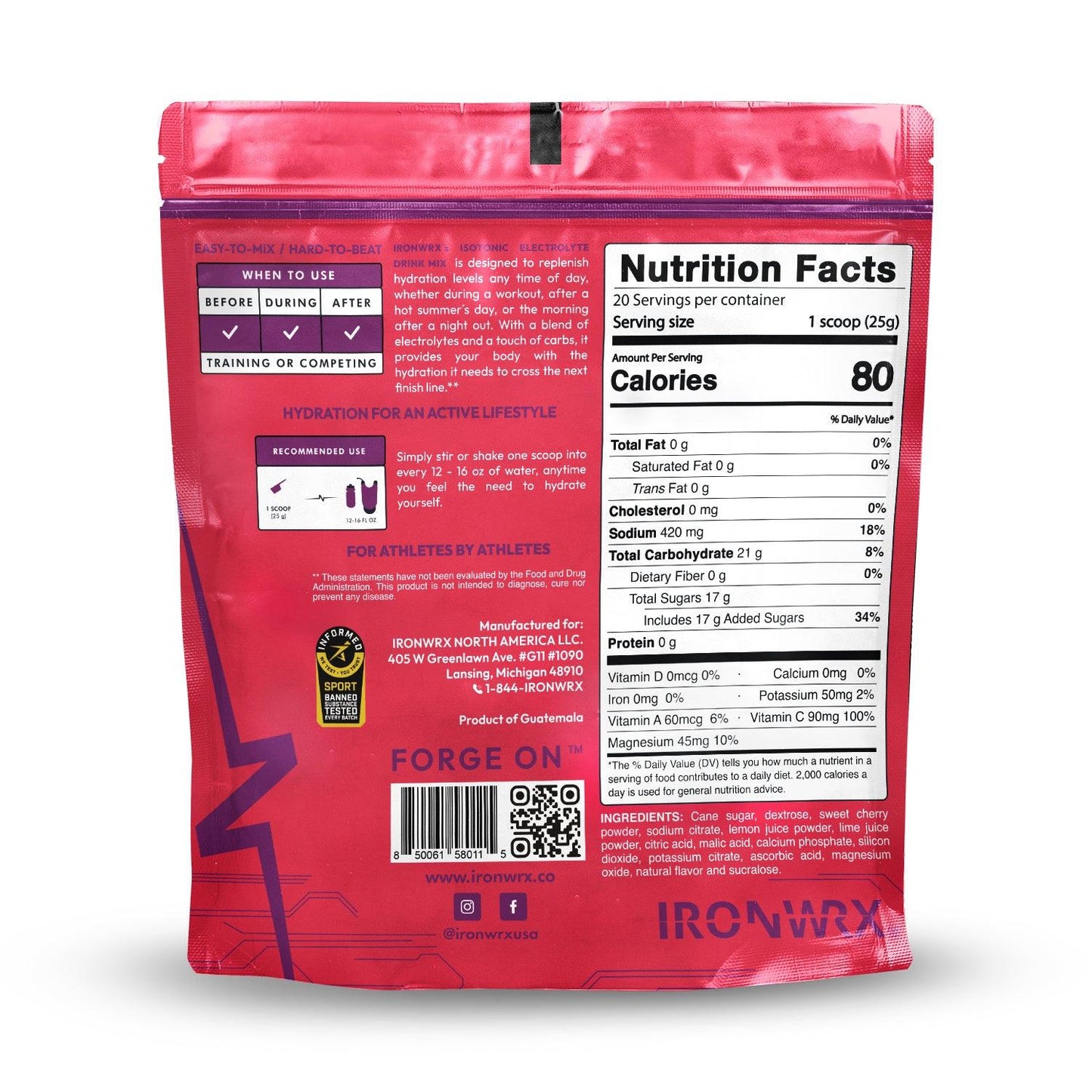
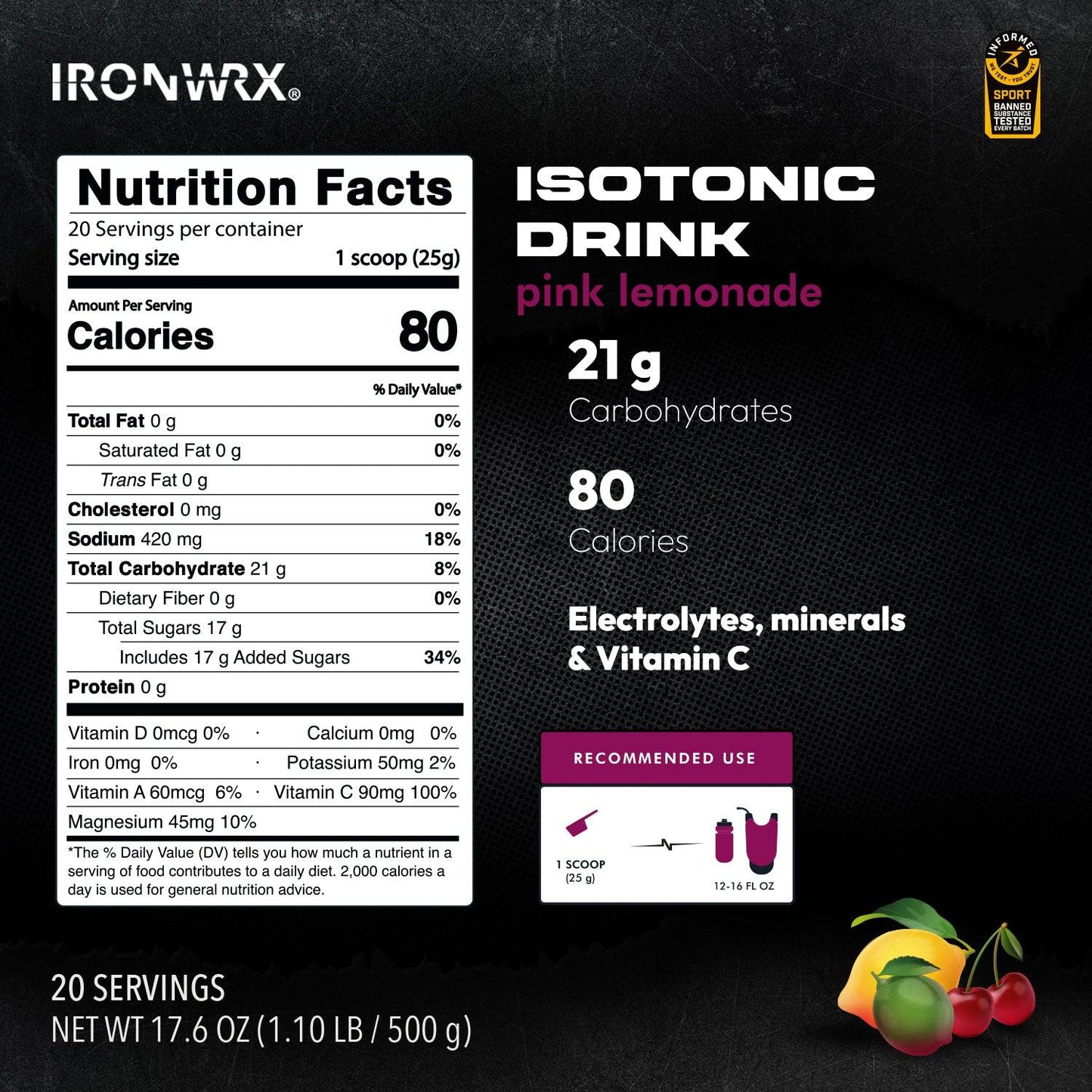
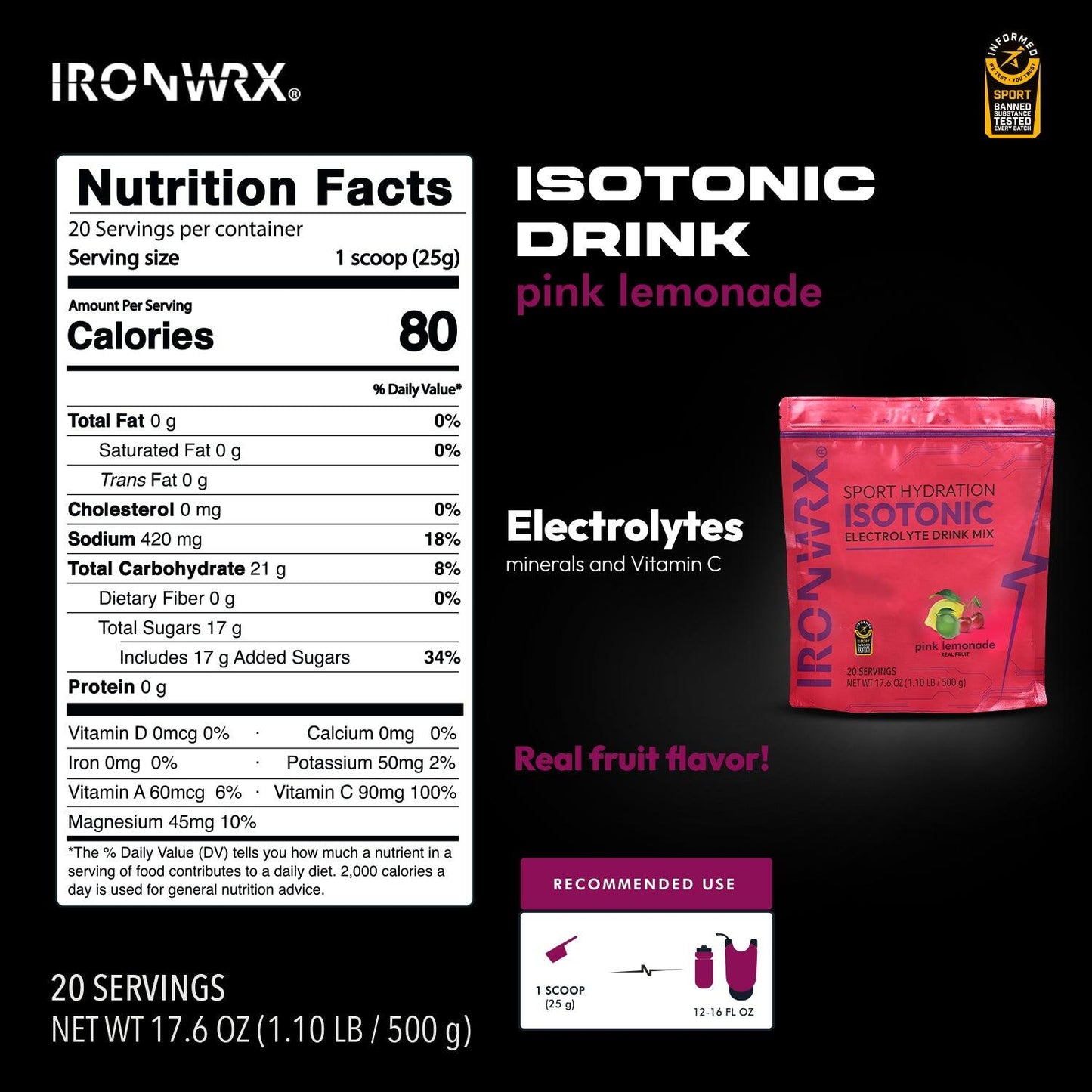
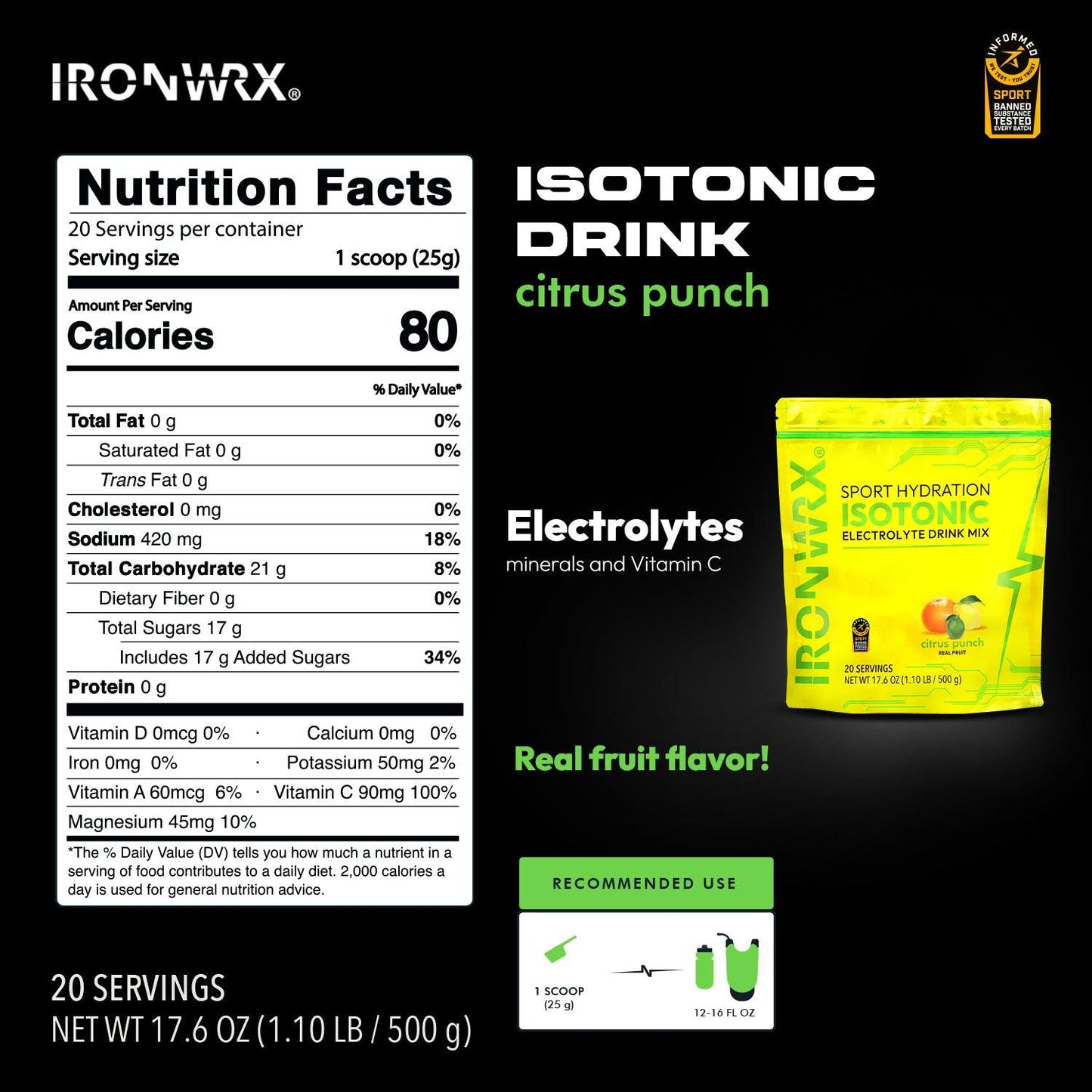
What sodium-containing fluids do is change the math. Every liter of plain water you drink dilutes your blood sodium further. A liter of an electrolyte drink puts sodium back in while you hydrate, which offsets some of that dilution — especially useful across long, hot efforts where you're drinking steadily for hours. IRONWRX Isotonic Electrolyte Drink Mix carries 420mg of sodium per serving for sessions under two hours, and Hypertonic Performance Drink carries 300mg of sodium alongside its time-release carbohydrate blend for longer, harder efforts where you're both drinking and fueling for hours at a stretch.
The takeaway isn't "drink more of this instead of water." It's: when you are drinking during a long session, choosing a sodium-containing fluid over plain water is the smarter default — paired with drinking to thirst, not a fixed schedule.
A Simple Rule of Thumb
- Drink when you're thirsty. Stop when you're not. Don't force fluids on a timer.
- On efforts under 2 hours, hydration is rarely the limiting factor — go by thirst.
- On efforts over 4 hours, be more deliberate: favor electrolyte-containing fluids over plain water, and don't chug at every single aid station out of habit.
- Don't pre-load with excess water before a race hoping to "bank" hydration — it doesn't work that way, and it raises your starting risk.
- If something feels wrong — confusion, bloating, a headache that's getting worse, not better — tell someone and get checked out rather than pushing through with more fluid.
Informed Sport Certified — Every Batch
Whichever hydration product you're using to manage a long session, every IRONWRX drink mix is third-party tested by Informed Sport, batch by batch, for substances banned in competition — so you're not adding a new variable to manage on race day.
This article is for educational purposes and isn't a substitute for medical advice. If you or someone else experiences confusion, seizures, or loss of consciousness during or after exercise, seek emergency medical care immediately.
FAQ
Is hyponatremia the same thing as dehydration? No — they're often confused because the symptoms overlap, but they're opposite problems. Dehydration is too little fluid relative to your body's needs; hyponatremia is diluted blood sodium, usually from too much fluid. Treating hyponatremia like dehydration (by drinking more) can make it worse.
Do electrolyte drinks prevent hyponatremia? Not on their own. The primary prevention is drinking to thirst rather than on a schedule. Choosing a sodium-containing drink over plain water during long efforts reduces how much you dilute your blood sodium per volume consumed, but you can still overdrink any fluid, including sports drinks.
How long does an effort need to be before hyponatremia is a real risk? Most documented cases occur in events lasting four hours or more, though it's been reported in shorter events too, particularly in hot conditions or with aggressive fluid intake. Duration matters, but total volume consumed relative to your body's needs is the bigger factor.
Sources
- Hew-Butler T, Rosner MH, Fowkes-Godek S, et al. "Statement of the Third International Exercise-Associated Hyponatremia Consensus Development Conference, Carlsbad, California, 2015." Clinical Journal of Sport Medicine, 25(4), 303–320. journals.lww.com — the expert consensus statement behind the "drink to thirst" guidance and the AVP/overhydration mechanism described above.
- Bennett BL, et al., summarized in "Exercise-Associated Hyponatremia: Updated Guidelines from the Wilderness Medical Society." American Family Physician, 2021. aafp.org — definition of EAH, risk factors (duration, NSAID use, weight-based fluid replacement), and current prevention guidance.
- Hew-Butler T, et al. "Exercise-Associated Hyponatremia: 2017 Update." Frontiers in Medicine. frontiersin.org — history of EAH recognition in endurance sports, including the 2003 Boston Marathon cases, and the case for reducing fluid availability on course.
- "Exercise-Associated Hyponatremia in Marathon Runners." PMC. ncbi.nlm.nih.gov — narrative review of EAH prevalence and risk factors in marathon populations.
- "Intended Hydration Strategies and Knowledge of Exercise-Associated Hyponatraemia in Marathon Runners: A Questionnaire-Based Study." PMC. pmc.ncbi.nlm.nih.gov — data on runners' hydration intentions and the persistent knowledge gap around overdrinking.
- "Exercise-Associated Hyponatremia: Serum Sodium, Symptomatology, Severity, and Sport Specificity." PMC. pmc.ncbi.nlm.nih.gov — symptom presentation and severity grading across sports.
Forge On.