Share
Introduction
Every serious athlete eventually hits the same wall: training is dialed in, nutrition is mostly right, and progress still slows down. Usually the missing piece isn't more effort in the gym or on the trail — it's what happens in the hours after the session ends. Recovery is where adaptation actually occurs, and recovery is nutrition-dependent in ways that are well documented but rarely explained clearly to the athletes who need the information most.
This article breaks down three of the most researched supplements in sports nutrition — hydrolyzed whey protein isolate, creatine monohydrate, and BCAAs with citrulline malate — and explains what each one actually does at a physiological level, where the evidence is strong versus where it's still developing, and how to combine them into a single, sensible daily protocol. No proprietary blends, no invented mechanisms, no promises that outrun the research.
Why Athletes Plateau: The Recovery Gap
Muscle protein synthesis (MPS) — the process by which the body repairs and builds muscle tissue after mechanical stress — is elevated for roughly 24 to 48 hours following resistance or high-intensity endurance training. During that window, the muscle is more responsive to amino acid availability than at almost any other time. If protein intake, total daily amino acid distribution, or cellular energy substrates fall short during that window, the training stimulus is present but the recovery response is blunted.
The International Society of Sports Nutrition's position stand on protein and exercise notes that both total daily protein intake and its distribution across meals influence the rate of muscle protein synthesis, and that athletes in heavy training blocks generally need more protein, spread more evenly, than the general population requires (Jäger et al., 2017). Most plateaus aren't caused by a training error. They're caused by an unmanaged recovery gap — and that gap is exactly where a well-built supplement stack earns its place.
The Three Pillars of the Stack
1. Hydrolyzed Whey Protein Isolate: Built for Speed, Not Just Purity
Most protein marketing focuses on purity — grams of protein per scoop, percentage of isolate versus concentrate. That's a reasonable starting point, but it misses the more important variable for recovery: how fast the amino acids actually reach the bloodstream.
Whey protein hydrolysate is whey that has already been partially broken down into smaller peptides before you drink it. That pre-digestion matters because gastric emptying and intestinal absorption happen faster with smaller peptide chains than with larger, intact protein molecules. Research comparing gastric emptying and amino acid appearance after ingestion of intact milk proteins versus their peptide hydrolysates found that the hydrolyzed form clears the stomach and delivers amino acids into circulation measurably faster (Calbet & Holst, 2004). For an athlete trying to hit the post-training MPS window, that speed advantage is the entire point of choosing a hydrolysate over a standard isolate or concentrate.
IRONWRX Whey Protein uses 100% hydrolyzed whey protein isolate — not a blend of protein sources — delivering 30g of protein and 7.4g of naturally occurring BCAAs per serving, along with soluble fiber and probiotics to support digestive comfort. The differentiator isn't that it's “purer” than a standard isolate; it's that the amino acids get to work faster, right when the muscle is primed to use them.
2. Creatine Monohydrate: The Most Studied Supplement in Sports Nutrition
Creatine monohydrate has one of the largest and most consistent bodies of research behind any performance supplement on the market. It works by increasing the muscle's phosphocreatine stores, which are used to rapidly regenerate ATP — the immediate energy currency cells rely on during short, high-intensity efforts like sprinting, climbing, or a hard finish push. The International Society of Sports Nutrition's position stand on creatine concludes that creatine monohydrate is not only effective for increasing high-intensity exercise capacity and lean mass during training, but is also one of the safest and most well-studied supplements available, across both athletic and clinical populations (Kreider et al., 2017).
There's also a growing, separate body of research on creatine's role outside of muscle. A review of creatine and cognitive function found measurable benefits for working memory and information processing speed, particularly under conditions of physical or mental fatigue such as sleep deprivation (Rawson & Venezia, 2011). That's relevant to endurance athletes specifically — anyone who has tried to make race-day decisions late into an ultra or long ride knows that cognitive fatigue is as real a limiter as muscular fatigue.
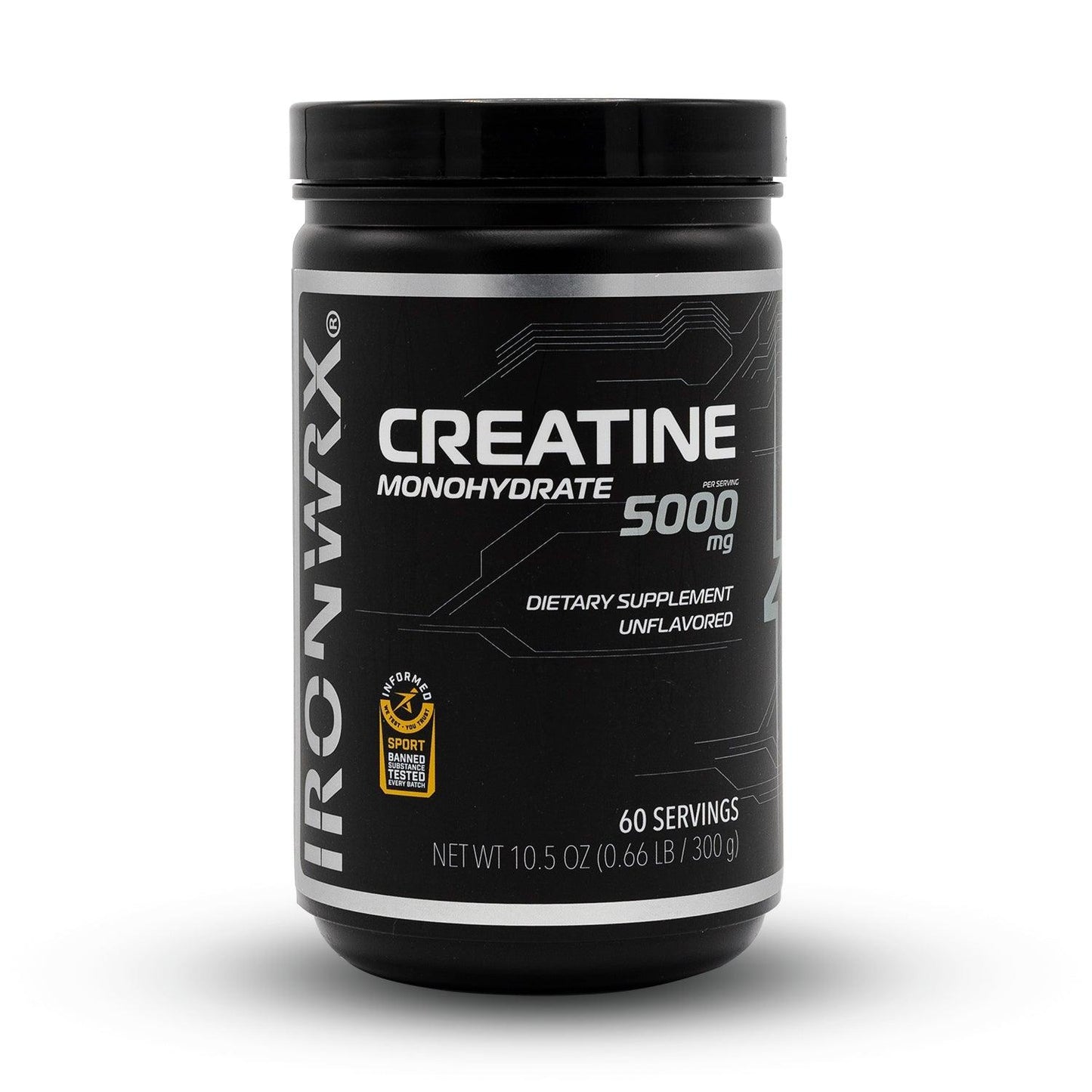
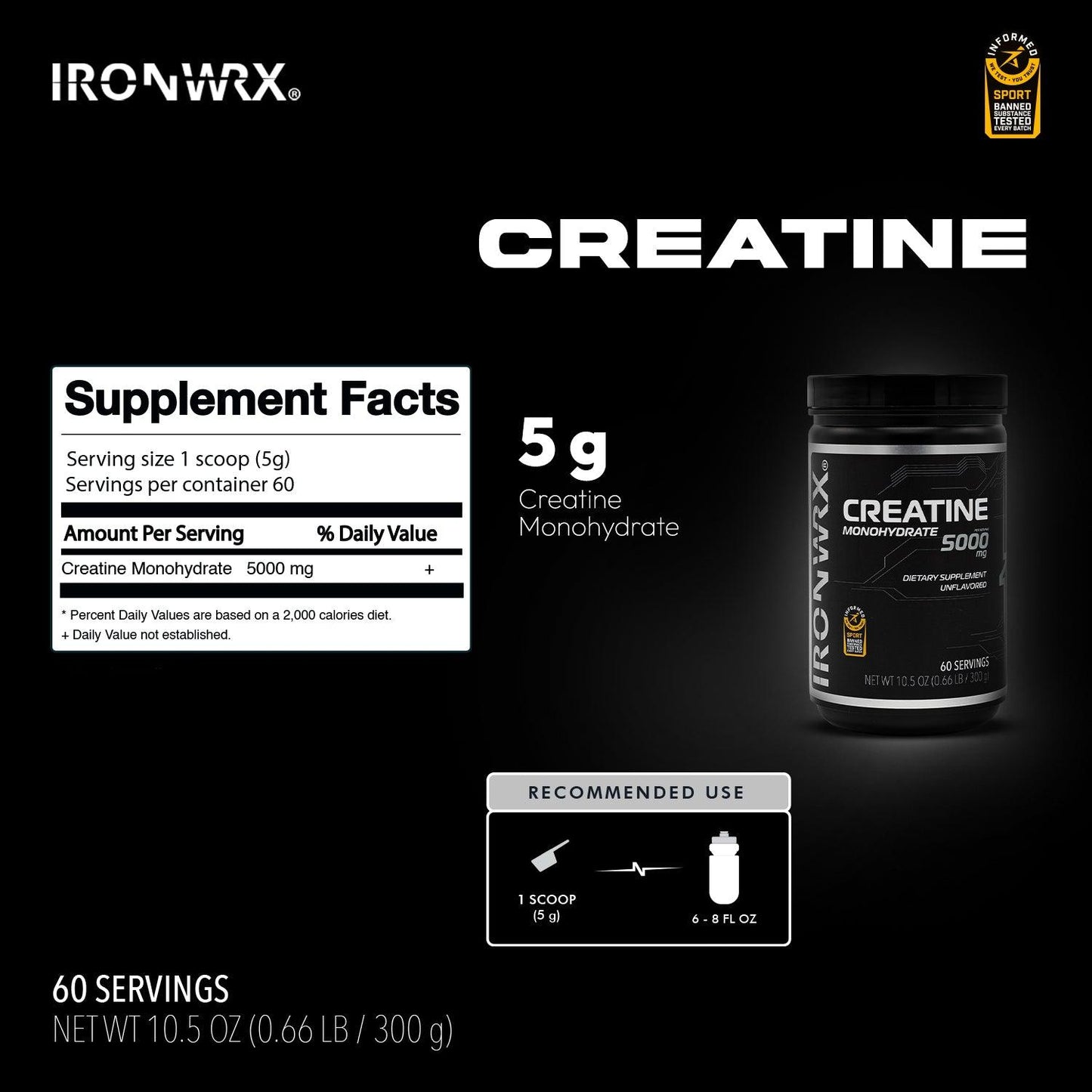
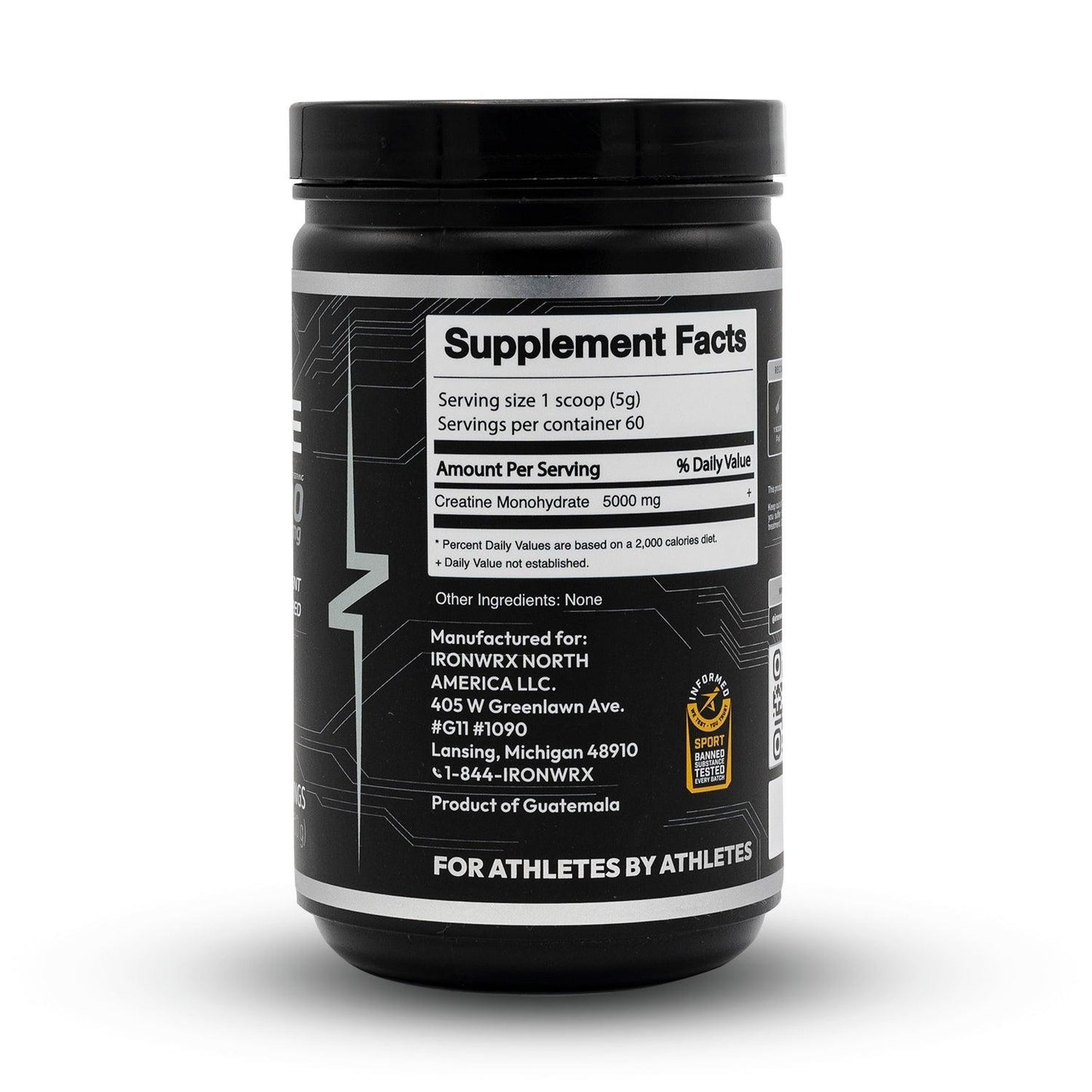
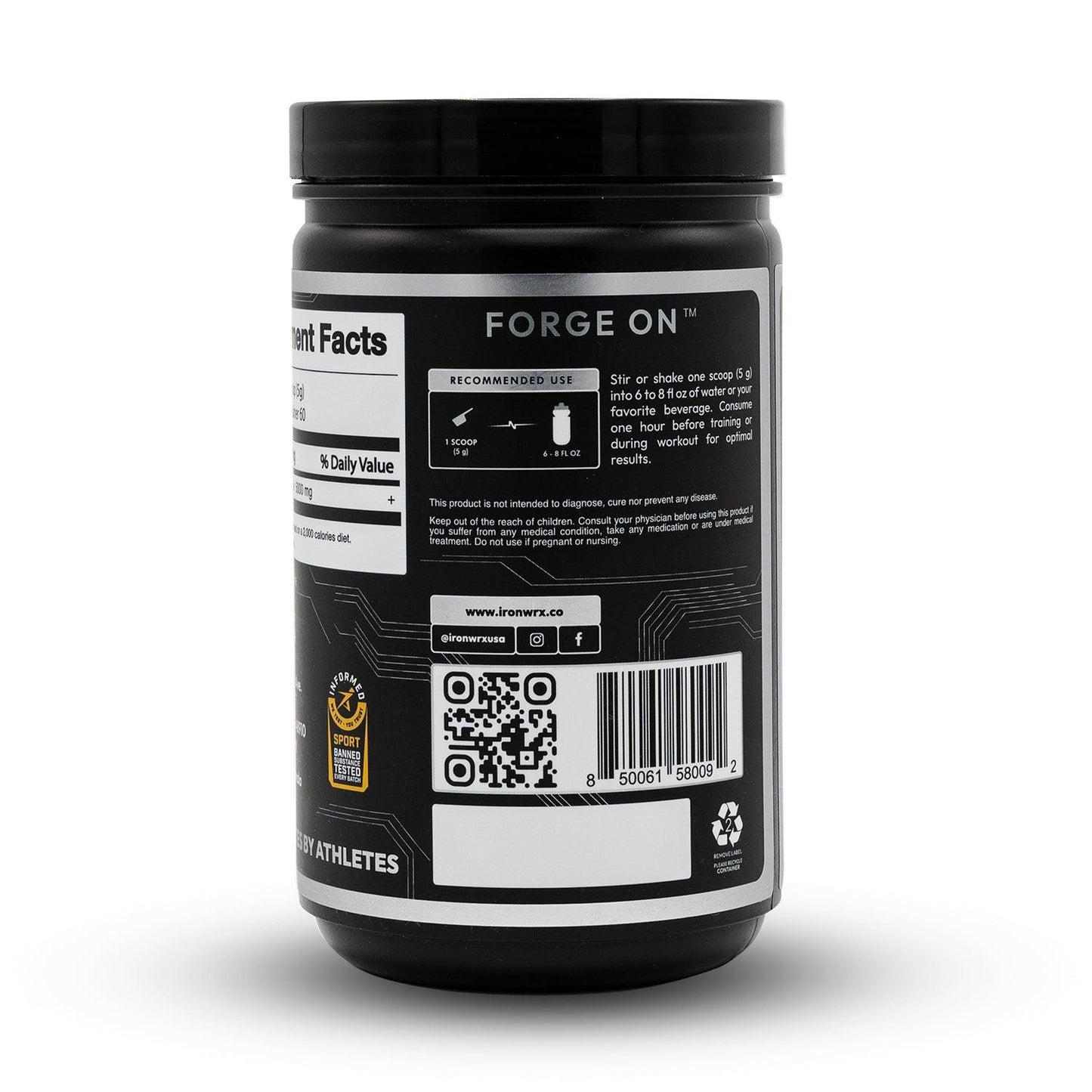
IRONWRX Creatine Monohydrate delivers a straightforward 5g per serving — the standard maintenance dose supported by the research above — with no additives and no proprietary dosing games.
3. BCAAs and Citrulline Malate: Preservation and Blood Flow
Branched-chain amino acids — leucine, isoleucine, and valine — are unique among amino acids in that they can be oxidized directly by skeletal muscle for energy, rather than requiring processing by the liver first. Leucine in particular acts as a direct signal for muscle protein synthesis. A review on BCAAs and muscle protein synthesis in humans notes that while BCAAs alone are not a complete substitute for full-protein intake, they play a meaningful role in blunting exercise-induced muscle protein breakdown, especially during fasted training or extended endurance efforts where a full protein feeding isn't practical (Wolfe, 2017).
Citrulline malate adds a second mechanism entirely: it's a precursor to nitric oxide production, which supports vasodilation and blood flow to working muscle. A controlled study on citrulline malate supplementation found it reduced sensations of muscle soreness and increased the number of repetitions performed in a fatiguing resistance exercise protocol compared to placebo (Pérez-Guisado & Jakeman, 2010).
IRONWRX BCAAs combine both mechanisms in one formula: an 8.5g dose of BCAAs in the research-supported 2:1:1 leucine-to-isoleucine-to-valine ratio, 2,500mg of L-glutamine to support muscle regeneration, and 1,000mg of citrulline malate — with zero stimulants, so it works equally well as a fasted pre-training energy source or an intra-workout fatigue buffer.
How the Three Products Target Different Pathways
The reason this particular combination works as a stack — rather than three products doing the same job — is that each one supports a distinct physiological pathway. Overlap is minimal; the effects are additive.
|
Product |
Primary Pathway |
Best Timing |
|
Muscle protein synthesis via rapid amino acid delivery |
Within 60 min post-training, or between meals |
|
|
ATP regeneration via phosphocreatine stores |
Daily, any consistent time — timing relative to training is less critical than consistency |
|
|
Muscle preservation, blood flow, and fasted-state fuel |
Before or during training, especially fasted or long-duration sessions |
Building the Daily Protocol
A stack is only useful if it fits into a routine an athlete will actually follow. Here is a straightforward daily structure for a training day:
• Morning / Pre-Training: 1 scoop BCAAs (fasted training) or with breakfast if training later in the day.
• Daily, Anytime: 1 scoop (5g) Creatine Monohydrate, mixed into water, juice, or a protein shake. Consistency matters more than timing.
• Post-Training (within 60 minutes): 1 scoop Hydrolyzed Whey Protein Isolate mixed with 6–8 oz. of cold water or milk.
• Between Meals or as Needed: Additional Whey servings to help hit total daily protein targets, generally 0.75–1.5g per pound of bodyweight for athletes in active training blocks.
This protocol is general guidance based on published research, not individualized medical advice. Athletes with underlying health conditions, or who are pregnant or nursing, should consult a physician before starting any new supplement protocol.
Common Mistakes Athletes Make With This Stack
• Treating creatine as a “workout day only” supplement. Phosphocreatine stores are built up over time — skipping rest-day doses slows saturation and undercuts results.
• Relying on BCAAs as a replacement for total protein intake rather than a supplement to it. BCAAs support muscle preservation; they don't supply the full amino acid profile a complete protein does.
• Waiting too long post-training to take in protein. The anabolic window isn't a hard cutoff, but delaying intake for several hours does reduce the efficiency of the response researchers have measured.
• Choosing a standard whey isolate or concentrate over a hydrolysate when speed of absorption is the actual goal — and then wondering why recovery still feels slow.
Frequently Asked Questions
Is hydrolyzed whey “better” than regular whey isolate?
Not universally — it's better suited to a specific goal. If the priority is delivering amino acids into circulation as quickly as possible, particularly around a training window, a hydrolysate has a documented speed advantage. If digestive comfort is the priority, the added fiber and probiotics in a hydrolyzed formula like IRONWRX Whey also help with that. It is not a claim about purity; both hydrolysate and standard isolate can be equally pure protein sources.
Do I need to cycle creatine?
No. The research reviewed by the ISSN position stand found no evidence that cycling creatine on and off provides any benefit, and continuous daily use at a maintenance dose (around 3–5g) is both effective and well-tolerated long term (Kreider et al., 2017).
Can endurance athletes benefit from creatine, or is it just for strength sports?
Both. While creatine's best-known application is short, high-intensity power output, endurance athletes benefit from its effects on cellular hydration and, increasingly, from the cognitive support shown in fatigue-state research — relevant to late-race decision-making in long events (Rawson & Venezia, 2011).
Is this stack Informed Sport certified?
Yes. IRONWRX Whey Protein, Creatine Monohydrate, and BCAAs are all Informed Sport certified, meaning every batch is tested by a third-party anti-doping laboratory for over 250 substances prohibited in sport. For athletes subject to drug testing, this is not a marketing detail — it's a requirement.
The Bottom Line
None of these three supplements is a shortcut, and none of them replaces consistent training or a solid overall diet. What they do is remove the guesswork from recovery: fast-absorbing protein for muscle repair, well-studied creatine for power and ATP regeneration, and a targeted BCAA/citrulline formula for preservation and blood flow. Used together and used consistently, they close the recovery gap that stalls most plateaued athletes — not through hype, but through mechanisms that are well documented in the sports nutrition literature.
Ready to build the stack? IRONWRX Whey Protein, Creatine Monohydrate, and BCAAs at ironwrx.co.
References
Calbet, J. A. L., & Holst, J. J. (2004). Gastric emptying, gastric secretion and enterogastrone response after administration of milk proteins or their peptide hydrolysates in humans. European Journal of Nutrition, 43(3), 127–139.
Jäger, R., Kerksick, C. M., Campbell, B. I., Cribb, P. J., Wells, S. D., Skwiat, T. M., Purpura, M., Ziegenfuss, T. N., Ferrando, A. A., Arent, S. M., Smith-Ryan, A. E., Stout, J. R., Arciero, P. J., Ormsbee, M. J., Taylor, L. W., Wilborn, C. D., Kalman, D. S., Kreider, R. B., Willoughby, D. S., … Antonio, J. (2017). International Society of Sports Nutrition Position Stand: Protein and exercise. Journal of the International Society of Sports Nutrition, 14, 20.
Kreider, R. B., Kalman, D. S., Antonio, J., Ziegenfuss, T. N., Wildman, R., Collins, R., Candow, D. G., Kleiner, S. M., Almada, A. L., & Lopez, H. L. (2017). International Society of Sports Nutrition position stand: Safety and efficacy of creatine supplementation in exercise, sport, and medicine. Journal of the International Society of Sports Nutrition, 14, 18.
Pérez-Guisado, J., & Jakeman, P. M. (2010). Citrulline malate enhances athletic anaerobic performance and relieves muscle soreness. Journal of Strength and Conditioning Research, 24(5), 1215–1222.
Rawson, E. S., & Venezia, A. C. (2011). Use of creatine in the elderly and evidence for effects on cognitive function in young and old. Amino Acids, 40(5), 1349–1362.
Wolfe, R. R. (2017). Branched-chain amino acids and muscle protein synthesis in humans: Myth or reality? Journal of the International Society of Sports Nutrition, 14, 30.