Share
4 Creatine Myths Debunked (And Why Third-Party Testing Matters More Than the Marketing)
Creatine monohydrate is one of the most researched supplements in sports science history — decades of trials, hundreds of studies, a well-established safety profile. And yet it's still surrounded by more misinformation than almost anything else on a supplement shelf.
If you're an endurance athlete who's stayed away from creatine because of something you heard at the gym, this one's for you. Let's separate what the research actually shows from what's just noise — and talk about why the certification on the label matters as much as what's in the tub.
Myth #1: "Creatine damages your kidneys"
This is the myth that won't die, and it usually traces back to one thing: creatine raises serum creatinine, a marker doctors use to screen for kidney function. On paper, that looks alarming. In practice, it's a measurement artifact, not a sign of damage — the rise reflects normal creatine metabolism, not impaired kidney function [1].
The International Society of Sports Nutrition's position stand — one of the most comprehensive reviews of creatine safety ever published — found no evidence that creatine supplementation at recommended doses harms kidney function in healthy individuals, drawing on studies tracking dosing anywhere from a few days to several years [1][2]. A 2021 meta-analysis of more than 685 trials involving roughly 13,000 participants found reported side effect rates for creatine users were statistically indistinguishable from placebo [3].
The nuance: if you have a pre-existing kidney condition, that's a conversation for your doctor, not a supplement label. But for the vast majority of healthy athletes, "creatine wrecks your kidneys" is a myth that's outlived the evidence against it.
Myth #2: "Creatine makes you bloated and puffy"
This one has a grain of truth buried inside it, which is exactly what makes it so persistent.
Creatine does draw water into your muscle cells — that's intracellular water, not the under-the-skin, "puffy" kind people picture when they say bloated [2][4]. Short-term studies show a temporary rise in intracellular water in the first several days of use, but longer training studies spanning weeks to months generally show no meaningful change in total body water relative to muscle mass [2][4].
For endurance athletes specifically, this distinction matters: you're not chasing a stage-ready look, you're chasing power output, recovery, and the ability to hold form late in a race. Intracellular hydration works in your favor there.
Myth #3: "Creatine is basically a steroid"
No — and this myth alone probably keeps more cautious, clean-sport-minded athletes away from a legitimately useful supplement than any other misconception on this list.
Creatine is a naturally occurring compound your body produces on its own and gets more of from foods like red meat and fish, whereas anabolic steroids are synthetic derivatives of testosterone that alter hormone production directly [2]. Creatine works through a completely different mechanism — regenerating cellular energy (ATP) — and doesn't touch the endocrine pathways steroids do [2].
It's also worth noting where the major governing bodies land on this: creatine does not appear on the World Anti-Doping Agency's prohibited list, and it's classified as a dietary supplement rather than a controlled substance in the U.S. and most other major markets [5]. That's a very different regulatory category than steroids, which are prohibited substances tested for in every major sport.
Myth #4: "Creatine is only for bodybuilders and powerlifters"
This is the myth most relevant to you if you're an endurance athlete — and it's the one costing you the most if you believe it.
Creatine's best-known role is boosting phosphocreatine stores, which your body uses to rapidly regenerate ATP — the energy currency behind short, high-intensity bursts. That's obviously useful for strength athletes. But endurance sport isn't one long steady effort — it's steady-state work punctuated by surges: the hill repeat, the finishing kick, the sprint out of T2, the move to break away from a pack. Creatine supports exactly those moments.
There's also a growing body of research on creatine's role in cognitive performance under stress — including the kind of stress endurance athletes know well. A controlled study using brain imaging found that a single dose of creatine helped sustain normal energy levels in the brain and improved working memory and processing speed during a night of sleep deprivation, with the effect measurable within a few hours and lasting several more [6]. A separate meta-analysis of creatine's cognitive effects in adults found moderate-quality evidence for benefits to memory specifically, with attention and processing speed showing promising but less certain results warranting further research [7].
Creatine isn't a strength-only supplement. It's one of the most well-studied, versatile supplements available, and endurance athletes are increasingly recognizing that.
Why Third-Party Testing Isn't Optional — It's the Whole Point
Here's the thing the myths distract from: the real risk with creatine was never the ingredient itself. It's what else might be in the tub.
Supplement manufacturing in the U.S. isn't pre-approved by the FDA the way pharmaceuticals are. That gap is exactly how contamination — including trace amounts of substances banned in competitive sport — ends up in products that never disclose it on the label. For an athlete who gets tested, that's not a hypothetical risk. It's a career risk.
This is where certification does the work marketing claims can't:
- Every single batch tested — not just the formula, the actual batch you're scooping from — screened for 250+ substances prohibited by organizations like WADA.
- Manufacturing facility audits — independent verification that quality control processes actually prevent cross-contamination, not just a claim on a website.
- Ongoing post-certification monitoring — products are pulled from retail shelves and re-tested on an ongoing basis, so certification isn't a one-time stamp that gets stale.
If you're an athlete who gets drug tested — collegiate, elite, amateur circuits with anti-doping policies — "trust me" isn't a certification. A batch-tested, third-party verified product is the difference between confidence and risk you can't see on a label.
The Bottom Line
Creatine monohydrate doesn't damage healthy kidneys, doesn't cause the kind of bloat people imagine, isn't a steroid, and isn't limited to the strength-training crowd. The science on all four points is well established.
What isn't settled — and what should be part of every athlete's decision — is whether the specific product in front of you was actually tested for what it claims to be free of. That's not marketing. That's a batch-by-batch, third-party verified fact, or it isn't.
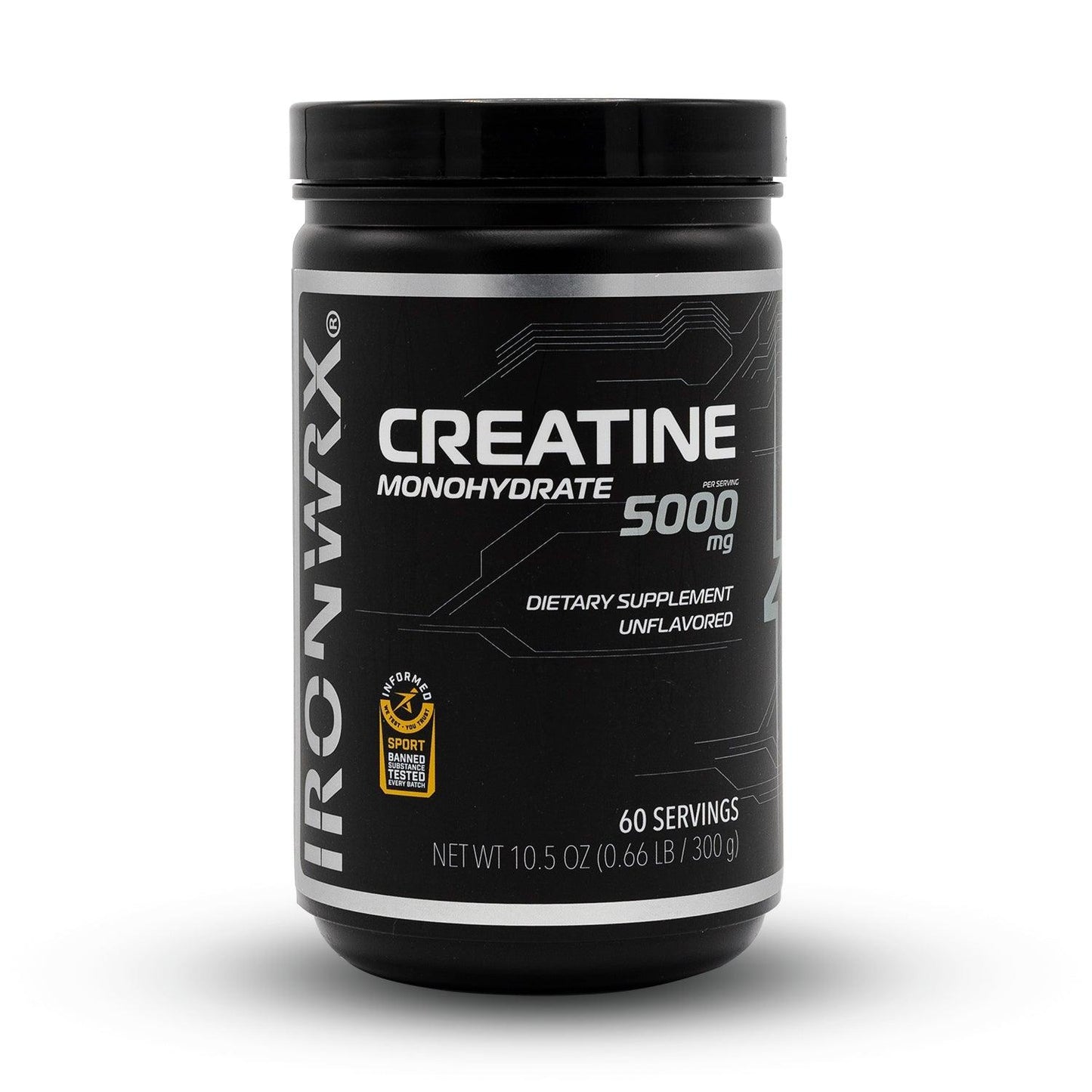
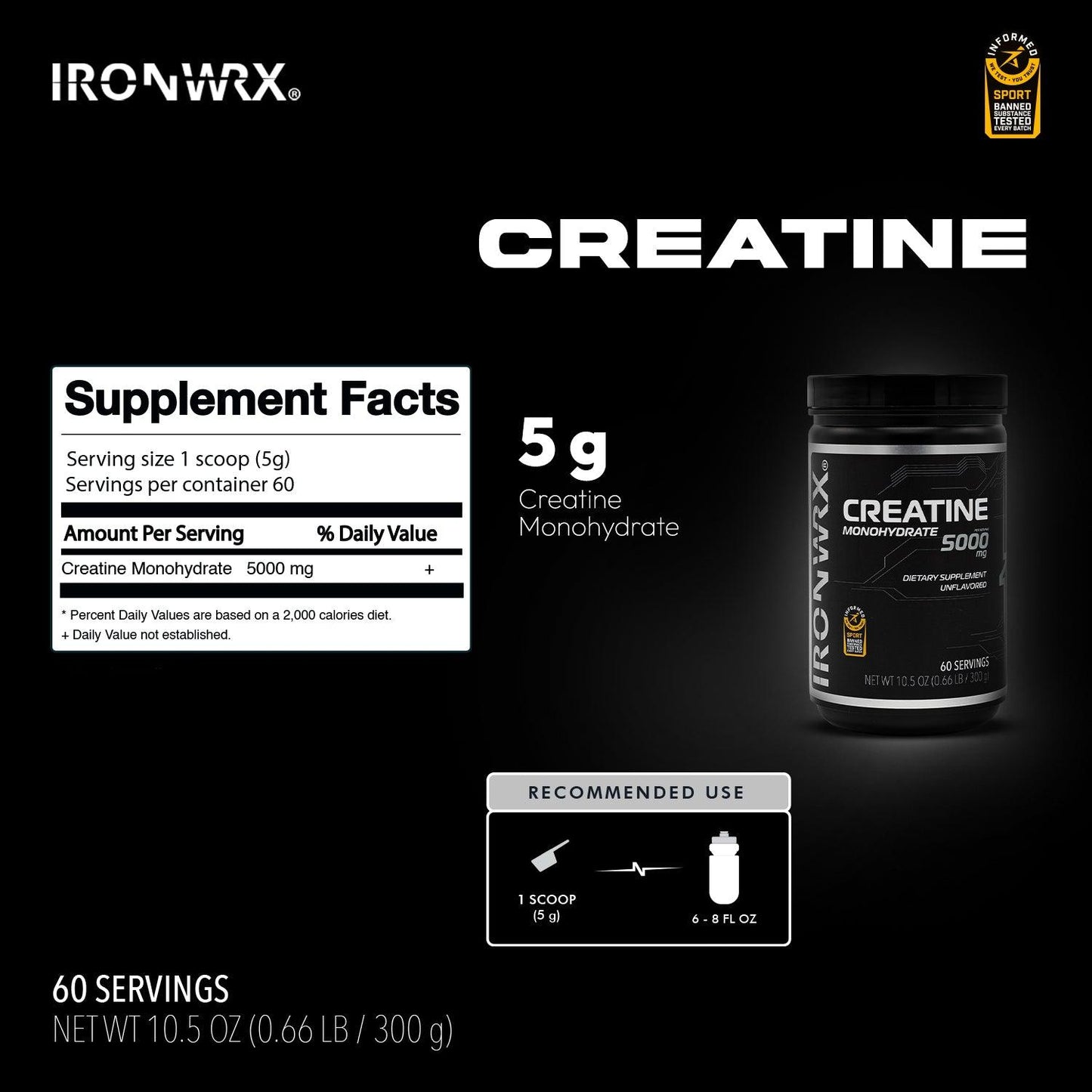
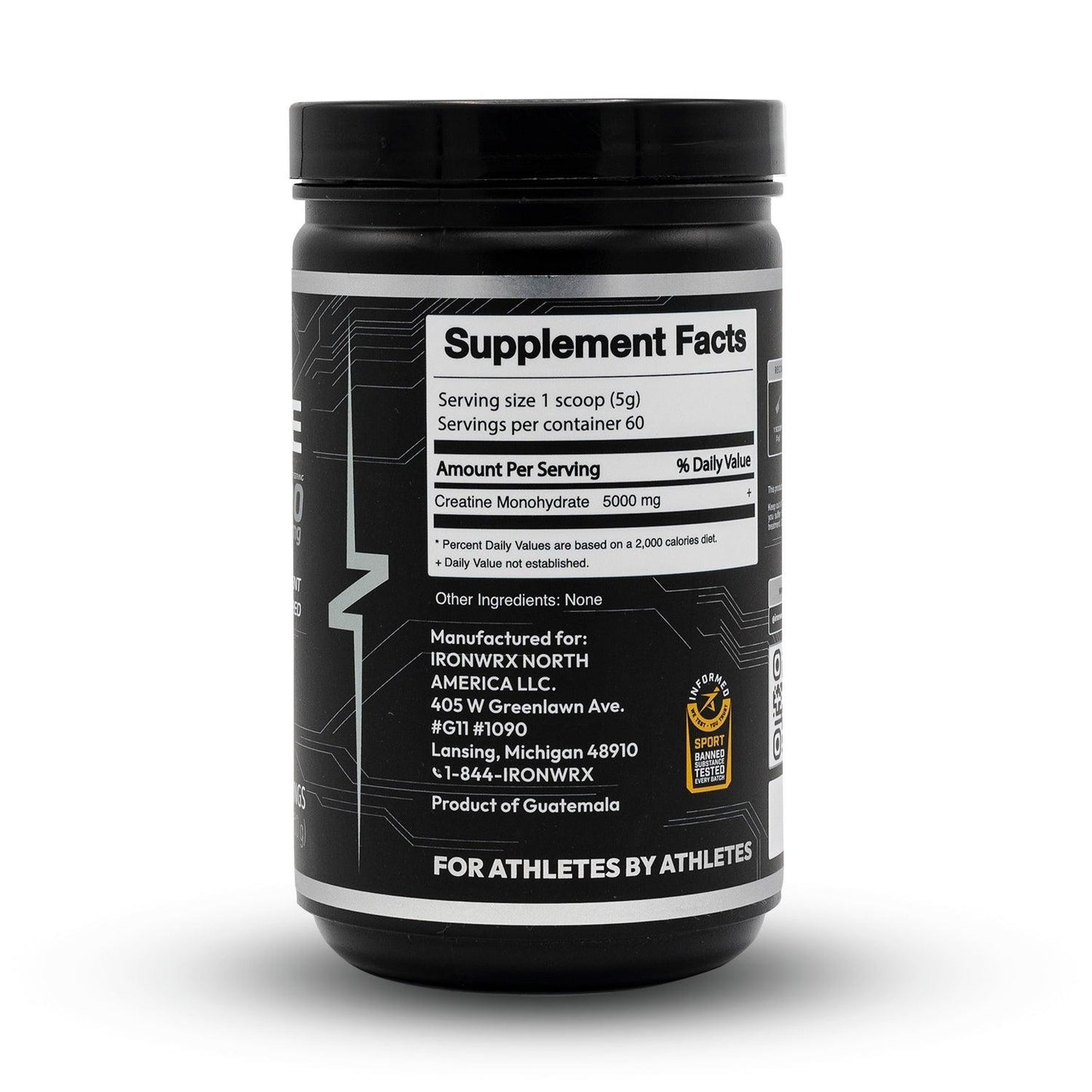
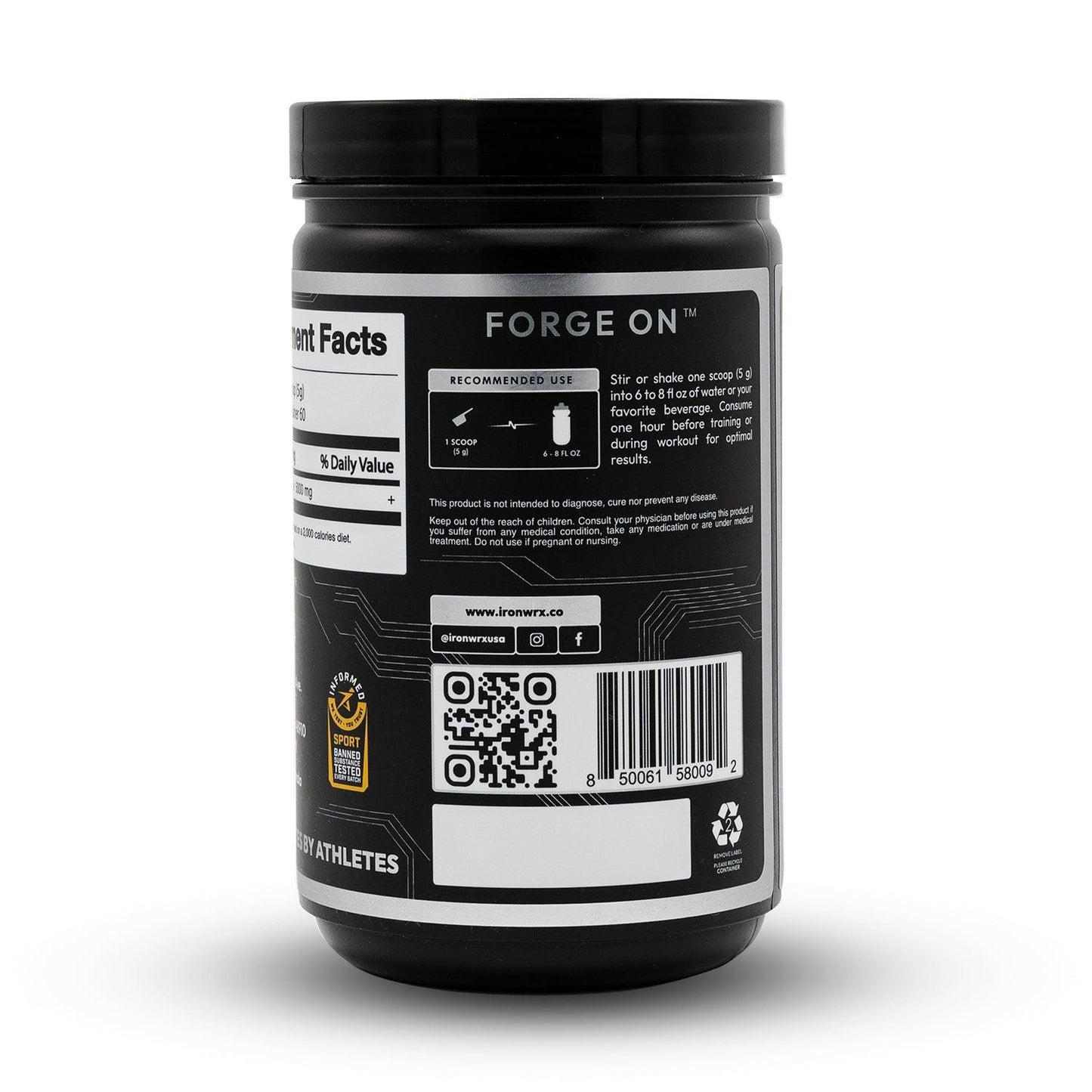
IRONWRX Creatine Monohydrate is Informed Sport certified — every batch tested for banned substances, straightforward 5g dosing, no proprietary blends, nothing to guess at. If you've been holding off on creatine because of something you heard, the myths were never the reason to worry. The certification is the reason to trust it.
Sources
- Kreider RB, Kalman DS, Antonio J, et al. International Society of Sports Nutrition position stand: safety and efficacy of creatine supplementation in exercise, sport, and medicine. J Int Soc Sports Nutr. 2017;14:18. https://www.ncbi.nlm.nih.gov/pmc/articles/PMC5469049/
- Antonio J, Candow DG, Forbes SC, et al. Common questions and misconceptions about creatine supplementation: what does the scientific evidence really show? J Int Soc Sports Nutr. 2021;18:13. https://link.springer.com/article/10.1186/s12970-021-00412-w
- Antonio J, et al. (2021), as summarized in ISSN-affiliated safety literature reviewing 685 trials and ~13,000 participants — side effect rates comparable to placebo. Referenced within [1] and [2] above.
- Transparent Labs. Debunking Creatine Myths: What Science Says About Water Retention. https://www.transparentlabs.com/blogs/all/debunking-creatine-myths
- WADA Prohibited List summary, as referenced in: Is Creatine a Steroid? Myths vs Facts Explained. https://creatine.my/safety/is-creatine-a-steroid/
- Gordji-Nejad A, et al. Single dose creatine improves cognitive performance and induces changes in cerebral high energy phosphates during sleep deprivation. Scientific Reports. 2024. https://www.nature.com/articles/s41598-024-54249-9
- The effects of creatine supplementation on cognitive function in adults: a systematic review and meta-analysis. https://www.ncbi.nlm.nih.gov/pmc/articles/PMC11275561/
This article is for general educational purposes and is not medical advice. Athletes with pre-existing kidney conditions or other health concerns should consult a physician before beginning any supplement regimen.